The future of manufacturing starts with listening. Mechanism's Worker Voice qualitative research project documents how manufacturers across sectors in three different cities are creating dignified workplaces for their employees, and improving retention in the process.
Good for Workers, Good for Business
How Manufacturers Are Elevating Worker Voice To Improve Retention
Executive Summary
Although the phrase "worker voice" lacks a single, agreed-upon definition, Mechanism defines it as honoring and amplifying employee perspectives—recognizing the inherent dignity and contributions of all people. To achieve that requires establishing a workplace culture that empowers employees to speak up and share in a way that their voices are heard, so that job quality improves.
But “worker voice” isn’t only about worker well-being. As you’ll read below, worker voice is also a smart business strategy. To fill hundreds of thousands of vacant manufacturing jobs, U.S. employers will need to create business environments that benefit worker well-being to entice a broad range of potential employees - including those who may have never seen themselves working in manufacturing.
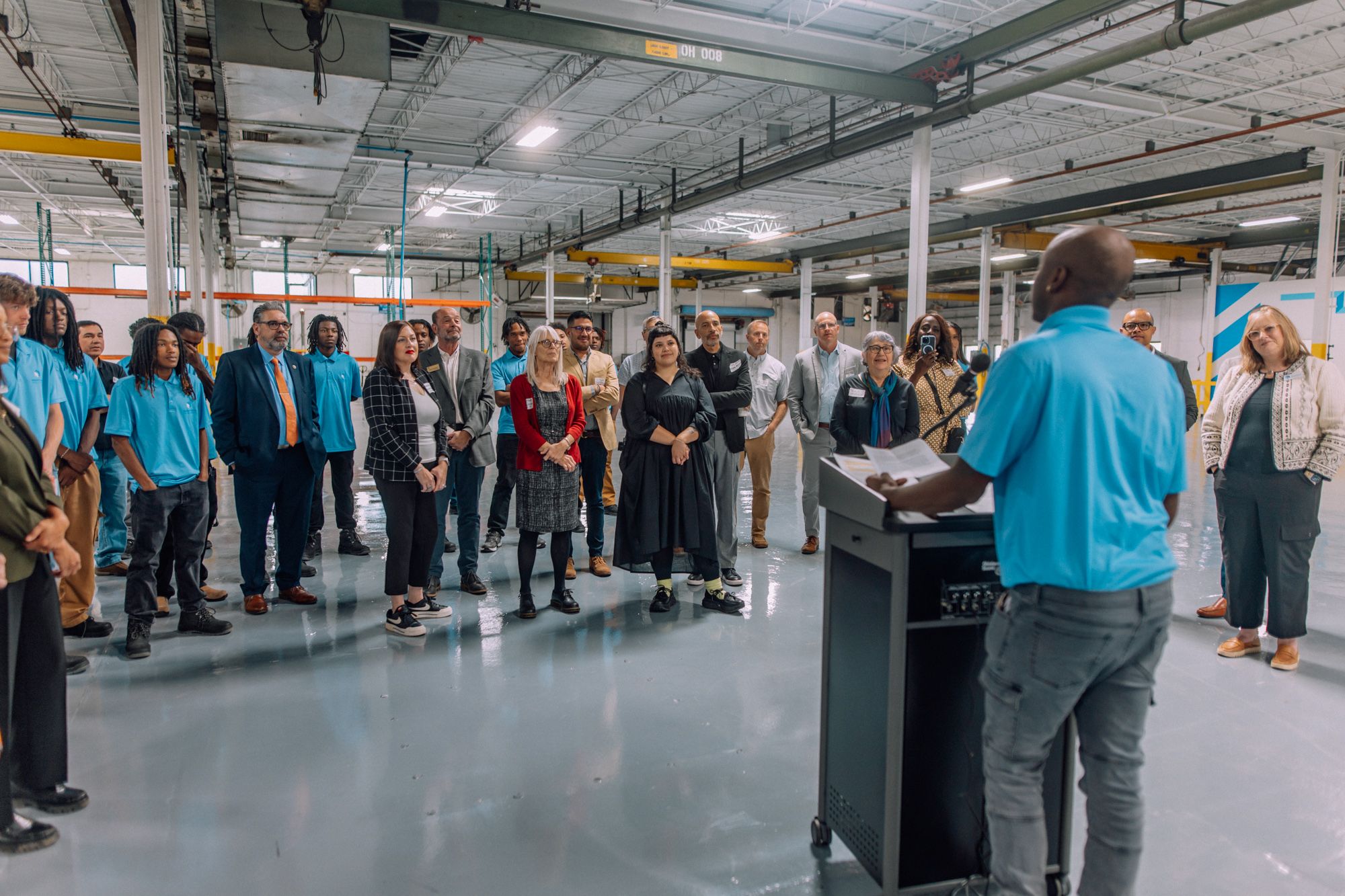
Credit: Giant Click Photography
This qualitative exploratory research project sought to understand how manufacturers can engage and center worker voice to address hiring and retention challenges.
In 2025-2026, Mechanism partnered with two workforce intermediaries, Harrison Consulting Group in Oklahoma City and Capital IDEA in Houston, to interview workers and employers at select manufacturing facilities in those cities and in Tulsa, Oklahoma.
Our key questions were:
- What are small and medium-sized companies doing to make workers feel they can safely share their thoughts and observations, and address concerns?
- How are manufacturers making sure employees see the professional and personal value in staying at their companies?
- What can workforce intermediaries do to better support companies and workers in this process?
In total these intermediaries spoke with 54 participants, ranging from business leaders to frontline workers.
Our long-term goal with this qualitative research is to develop tools that can help manufacturers - and the intermediaries that serve them - across the country reduce turnover and improve workplace conditions. Those tools are in production now.
Credit: Giant Click Photography
In this report, you’ll find the most important lessons we uncovered. These are actions or ideas that can be incorporated immediately into business and intermediary practices.
Main Findings: What’s Good for Workers is Good for Companies
Intermediaries learned that creating conditions for workers to express themselves is a common-sense way to treat people with respect that, in the long-term, leads to economic and productivity returns for businesses.
Here are the practices and insights that can elevate worker voice.
Small Gestures of Respect Drive Retention
This looks like
Better floor mats for workers who stand all day. Owners greeting employees each morning. Managers asking "What do you have going on right now?" instead of "Come here, I need you to do this."
Worker benefit
Employees feel valued as humans, not interchangeable parts.
Company benefit
One company retained over one-third of employees for 20+ years through family-oriented culture and respect. Another saw a 35% increase in employee engagement scores in one year after improving engagement practices.
“I stay because of the people I work with, building friendships and loyalty." — Focus group participant.
Giving Employees Purpose in the First 30-60 Days
This looks like
Structured onboarding with realistic job preview. Mix of classroom and hands-on training (not 4-6 weeks trapped in a classroom). Introductions and mentorship from existing employees on the floor. Visible leadership presence. Clear expectations from day one.
Worker benefit
New hires understand what they're getting into, feel connected to company purpose, and see a path forward.
Company benefit
Companies with structured onboarding reported high retention rates. One company reduced early turnover by changing from 4-6 weeks classroom-only to 3-4 days classroom mixed with half-days on floor, since workers were "ready to get their hands dirty."
“Thirty to 60 days on the job kind of sets the stage of what was sold and what was presented." — Focus group participant.
Credit: Giant Click Photography
Listening Leads to Loyalty and Better Decision-Making
This looks like
Ongoing listening that is part of company culture, not a one-off event. Open-door policies; informal "coffee talks" to gather feedback and implement changes based on employee insights.
Worker benefit
Workers feel comfortable expressing themselves. Their expertise is valued and they can influence their work environment and the decisions that affect them.
Company benefit
Workers are happier and less likely to look for other employment opportunities. In some cases, workers who leave for better pay come back because of culture.
“When they realize the job duties, the people they work with, the attitude people have, [employees who left] liked it better here." – Focus group participant.
Clear Growth Pathways Keep People Engaged
This looks like
Companies send workers to training for new skills that are relevant not only to work, but to their own lives. Formal classification system identifying employee skills and advancement milestones. Clear job descriptions and benchmarks allowing dedicated employees to progress significantly within an established timeframe (like five years).
Worker benefit
Workers see a future, not just a job. They realize they can earn more by developing skills where they are, rather than by job-hopping. They see how skill development at work supports their lives as a whole.
Company benefit
Reduced turnover. Workers invest in company success because they see their own growth tied to it.
“If I'm not growing in a company, then I really have no reason to be here. I’m wasting my time and wasting their time." — Focus group participant.
Flexible Scheduling Helps Workers Engage
This looks like
Work hours that get employees home faster by keeping them out of rush hour traffic (like 6:00 AM–2:30 PM schedule). Allowing flexibility for childcare and personal obligations. Offering established or flexible schedules based on the worker’s needs. Not questioning when workers need time off for health.
Worker benefit
Workers can plan their lives, care for families, reduce commute stress, take care of their health – all without the fear of scrutiny or repercussions at work.
Company benefit
Retention improves when workers can balance work and personal responsibilities. Addressing scheduling needs based on worker feedback strengthens their loyalty to the company.
“No matter how much time I needed off, they never said no." — Focus group participant.
Showing The Meaning Behind The Products
This looks like
Lunch-and-learns where customers explain how they use the parts workers make. Showing workers the final products (planes, cars, medical devices) their components go into.
Worker benefit
Workers understand why their work matters. Not just making parts, but contributing to products people use every day.
Company benefit
Workers take more pride in quality. They feel like contributors, not cogs.
“That guy out there making a part starts to understand why that matters." – Focus group participant.
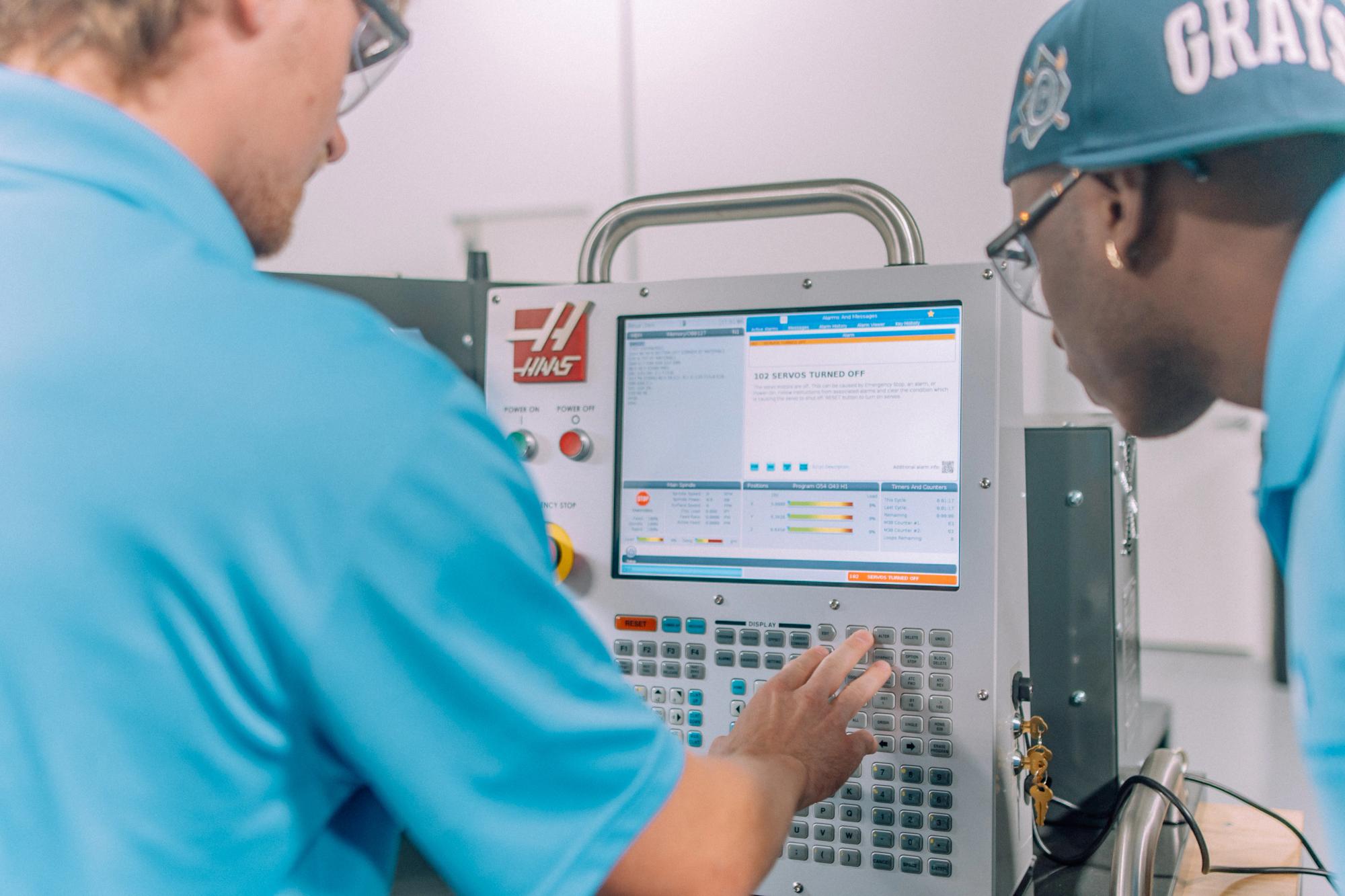
Credit: Giant Click Photography
Values-Based Hiring Beats Experience-Based Hiring
This looks like
Prioritizing cultural alignment over extensive experience. Assessing candidates for team-oriented traits and company values fit. Companies actually hire based on character and initiative, rather than just job experience.
Worker benefit
People who've never worked in manufacturing but are willing to learn get opportunities. Personal networks (family, friends) help people discover these jobs.
Company benefit
Better cultural fit = better retention. Workers hired for values and trained for skills stay longer than experienced workers hired only for their résumé. Companies reduce turnover by finding the right people, not just credentialed people.
“We'd rather have somebody with less experience yet be a team player at our company … We can help them grow." – Focus group participant.
Frontline Team Leads Are A Secret Weapon
This looks like
Investing in team leads who were former production workers. Training them in management skills (not just promoting them and hoping for the best). Empowering them to listen to and advocate for frontline workers.
Worker benefit
Supervisors who understand the actual job, don't micromanage, and amplify worker concerns upward.
Company benefit
Team leads spot inefficiencies and problems faster than upper management because they're closest to the work. They build trust that reduces turnover.
Research Process Map
Worker Voice captured perspectives from workers, team leads, and managers/executives across Oklahoma City, Tulsa, and Houston.
To prepare for data collection, we first invested time in building relationships with company and intermediary leadership, developed an initial definition of worker voice with their input, and then designed our research questions.
This co-design process helped achieve buy-in with participants and opened the door for us to talk with workers.
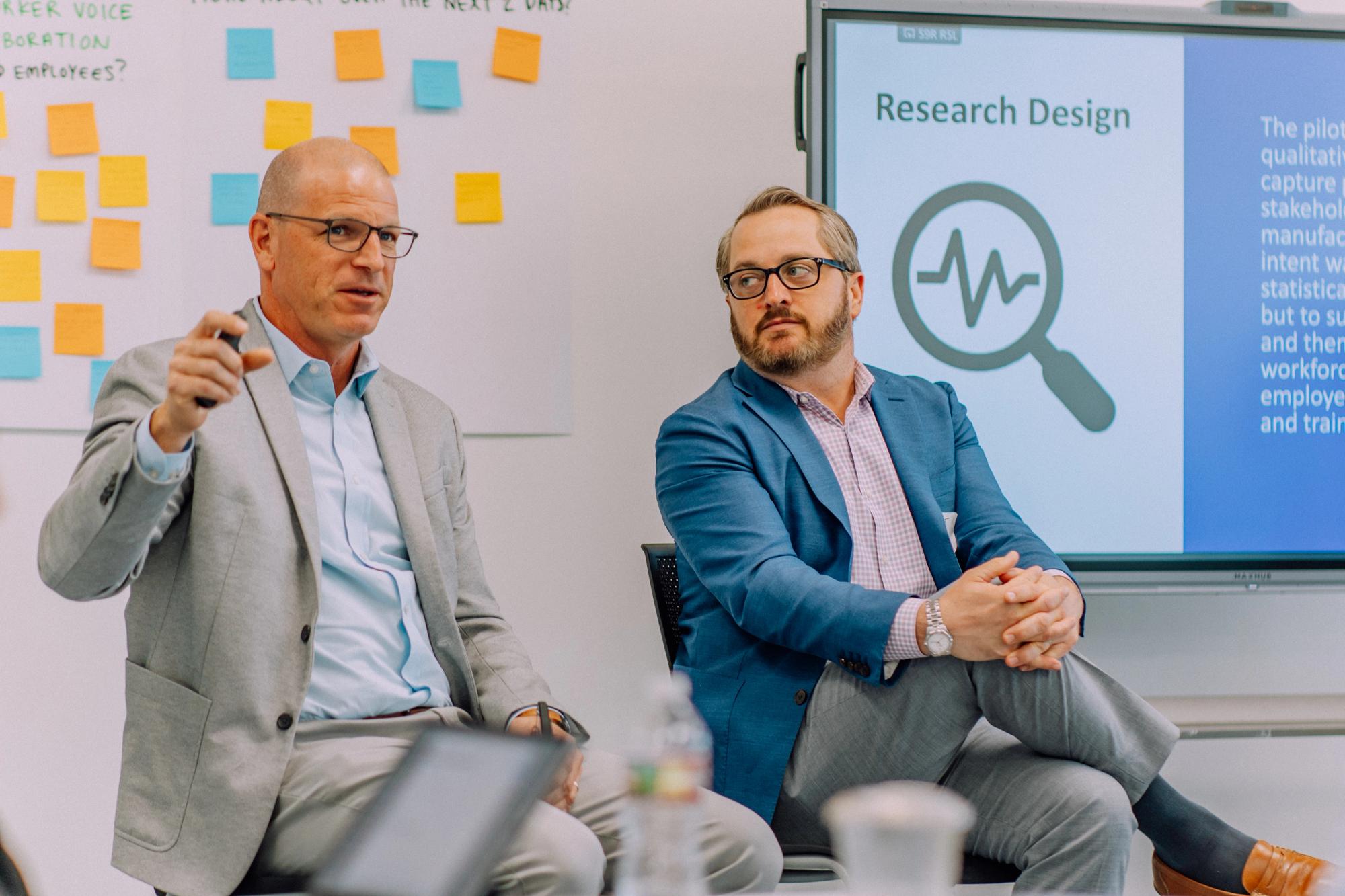
Credit: Giant Click Photography
Participants
Oklahoma City/Tulsa
40 participants across 8 companies with 27-2,000 employees (aerospace, energy, job shops, HVAC)
Houston
4 manufacturers, 10 participants across 6 companies with 11-50 employees (aerospace, industrial machining, medical)
Data Collection Methods
- Focus groups and individual interviews performed virtually, telephonically, and in-person.
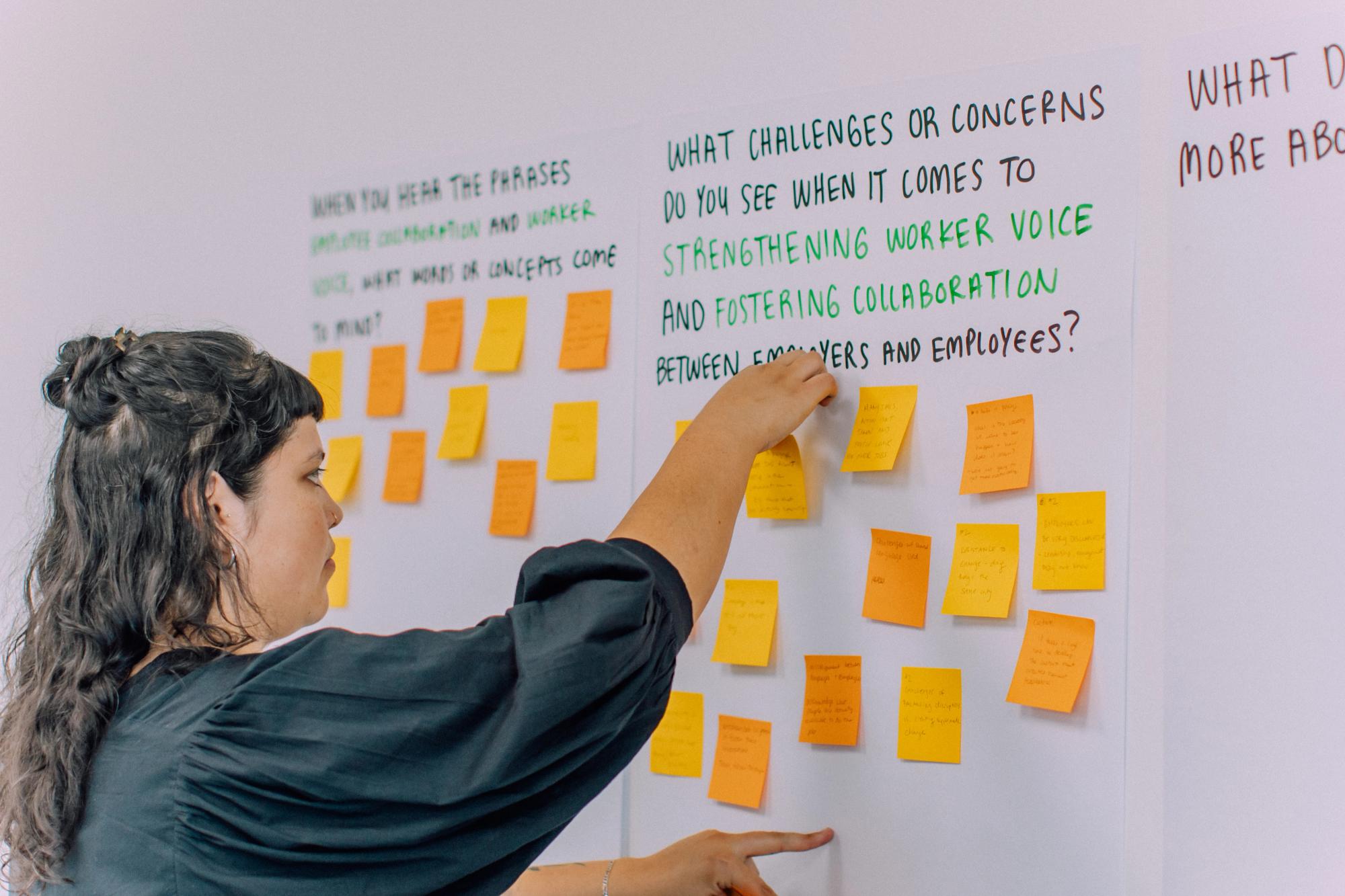
- Participants used sticky-notes, written, and verbal responses to provide individual responses.
- Interviews (45-60 minutes each) explored recruitment, retention, job quality, training, and worker voice mechanisms.
- All responses anonymized; thematic analysis identified patterns across stakeholder groups.
- Different techniques were used by each partner, but notably, the inclusion of research & data tool Dedoose was used to identify and categorize themes.
National Forum to Share Findings and Workshop Action Steps
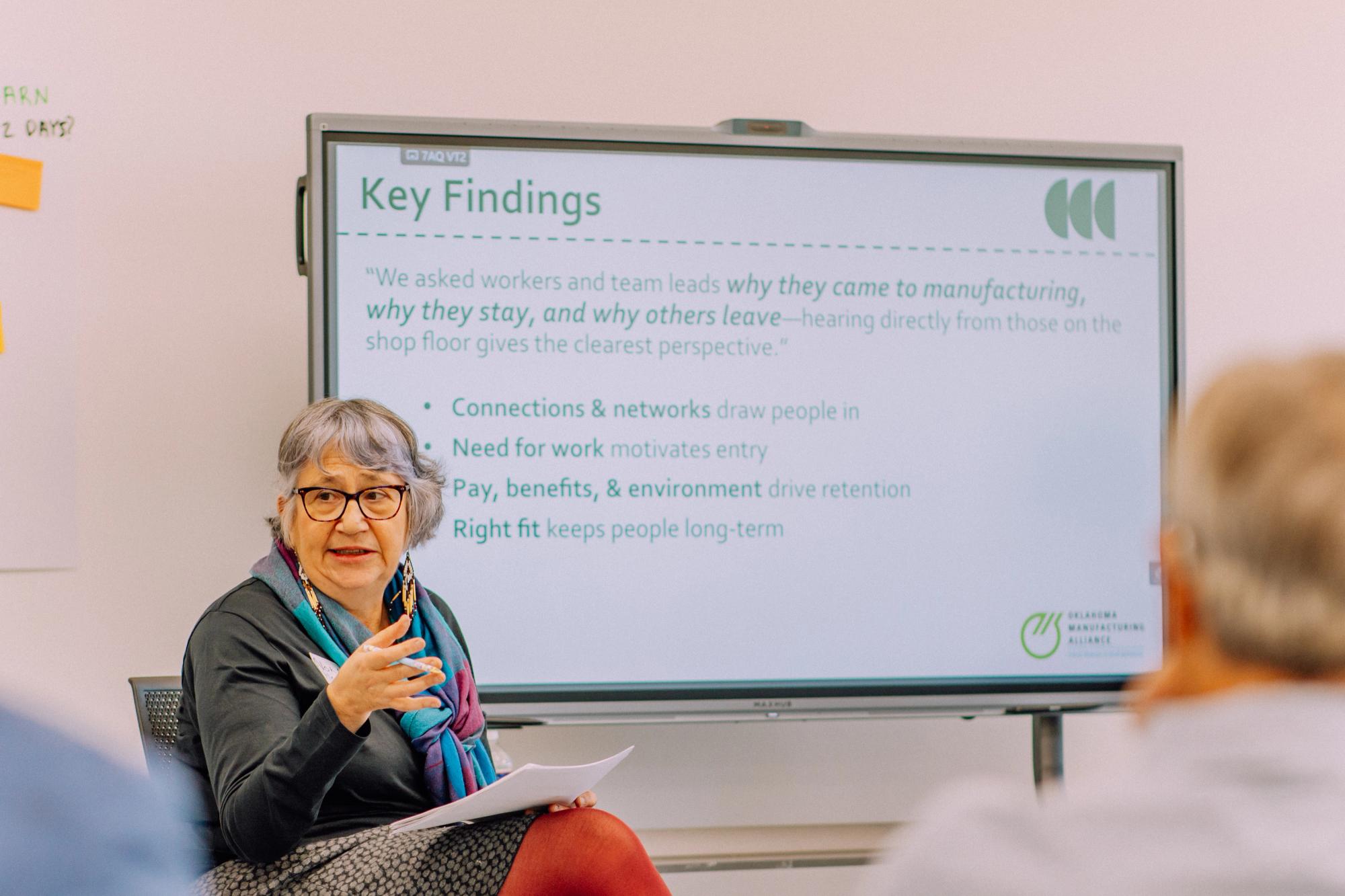
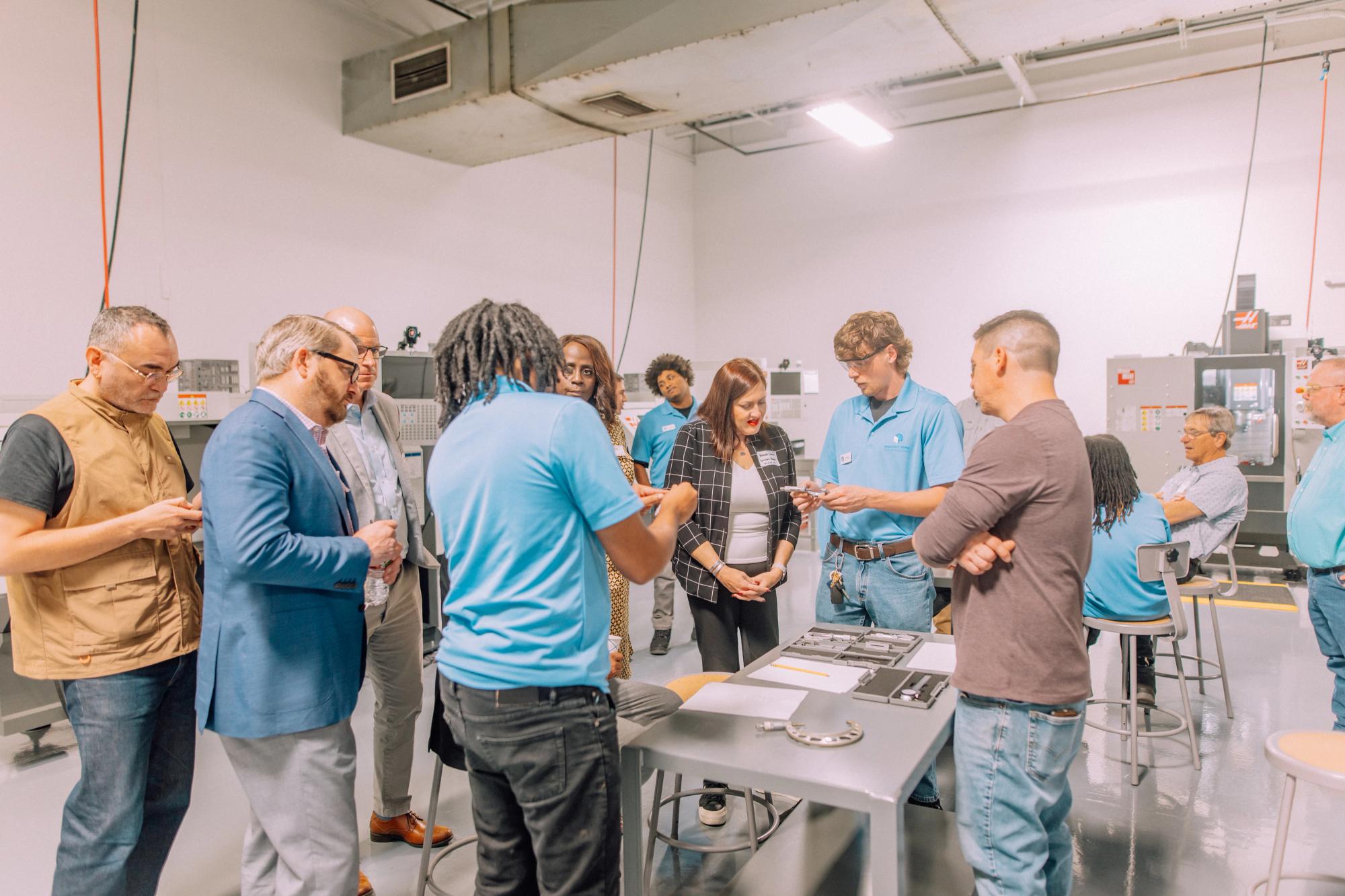
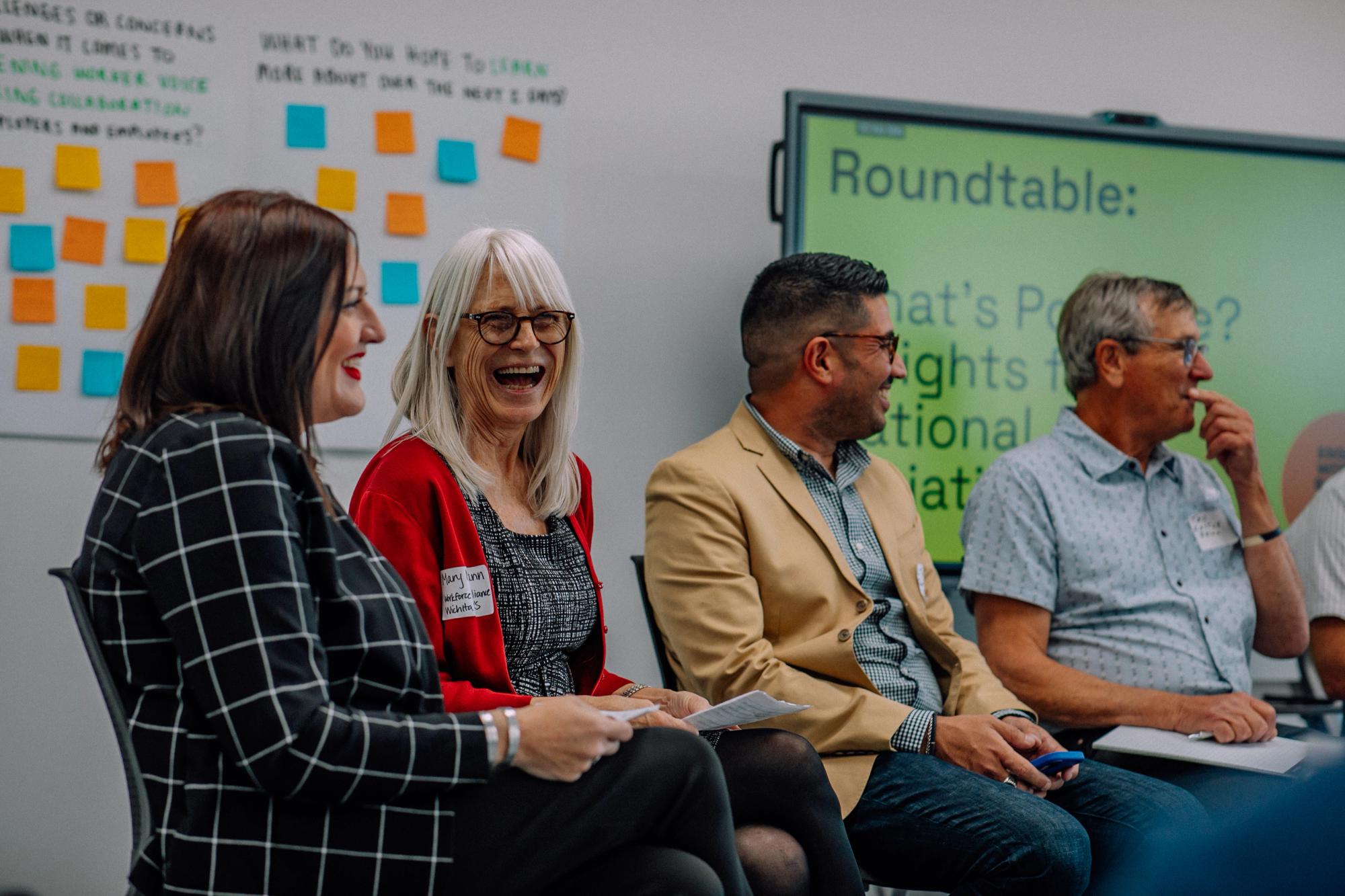
To deepen the impact of this work, manufacturing leaders, business owners, workforce development experts, and workers gathered in Oklahoma City in October 2025 for Mechanism’s two-day convening, “National Forum on Engaging Employers & Workers.”
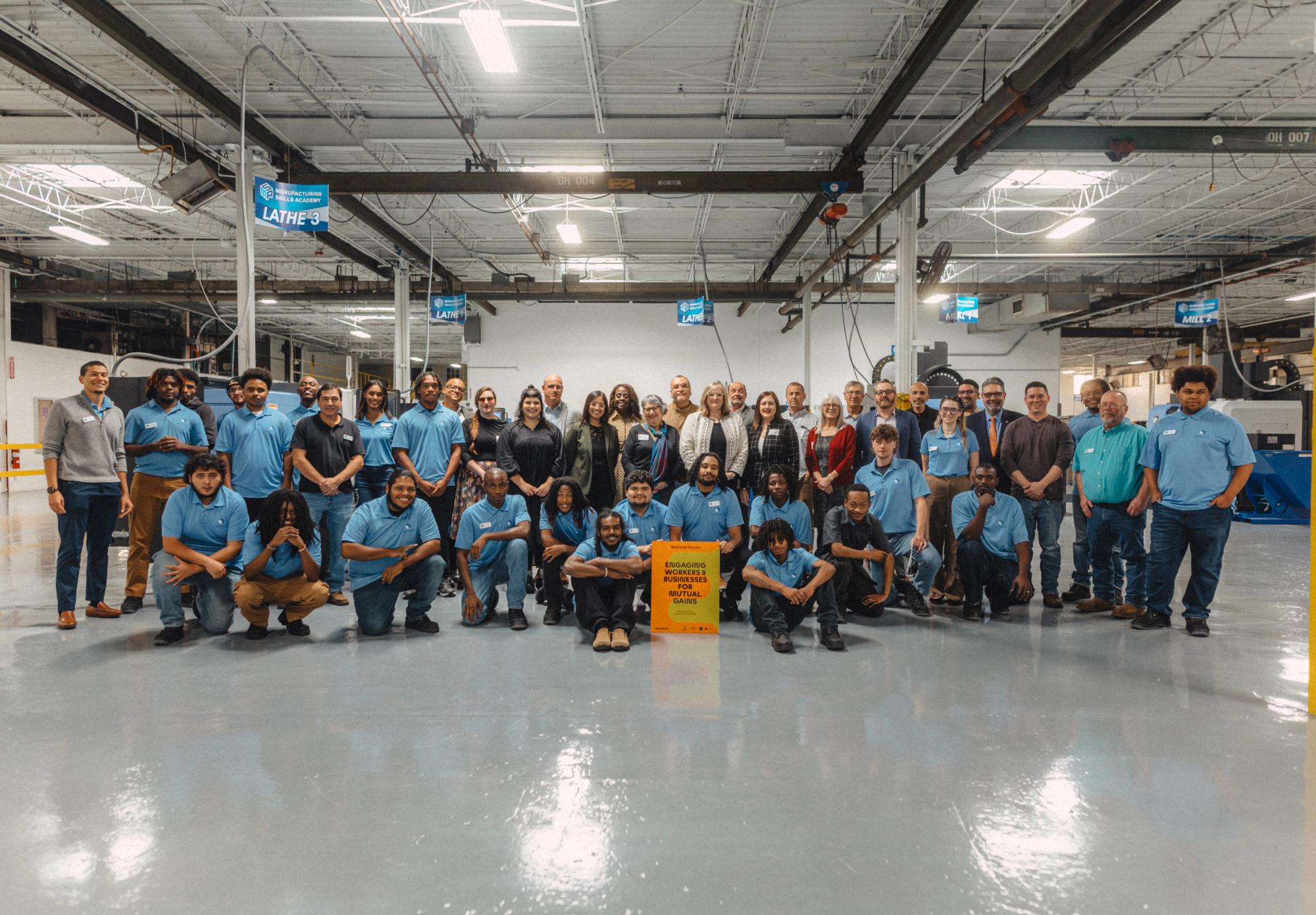
Credit: Giant Click Photography
The forum gave us a chance to reconnect in-person with local partners, businesses, and national workforce groups that are pursuing similar strategies across the county. The two-day event led to an even deeper understanding of practices that champion worker voice.
To learn more about the event and what we learned from our participants, read our event analysis here:
Worker Voice in Manufacturing
Credit: Giant Click Photography
Credit: Giant Click Photography
Credit: Giant Click Photography

Credit: Giant Click Photography
Next Steps
With our initial findings, Mechanism and its partners want to make sure other stakeholders - businesses, policymakers, community organizations, economic development groups - have this knowledge on hand and can act on it in a way that is appropriate to their local or regional context.
To achieve that end, this is what we think needs to happen next:
Create Worker Voice Toolkit That Any Business Can Follow and See Results
Workforce intermediaries, national nonprofits, unions, and community-based organizations should collaborate to produce a simple toolkit that gives small- and medium-sized manufacturers an actionable roadmap to incorporating the best practices mentioned in this report without the need to bring in outside consultants.
Any roadmap should promote the following core concept: Employees throughout a company's hierarchy should have the freedom and opportunity to discuss workplace issues that matter to them.
Roadmaps should adhere to frameworks like the U.S. Department of Labor’s Good Jobs Principles or Jobs For The Future’s Blueprint for Amplifying Worker Voice.
Launch National Education Campaign With Multiple Partners’ Voices
Workers, executives, nonprofits, workforce boards, and policymakers interested in improving workplace conditions should collaborate to produce educational materials around this topic. For example, webinars are an engaging, easy-to-access way for stakeholders across geographies to share insights on successes and challenges elevating worker voice.
Help Employers Understand the Value of Community-Based Organizations
As part of education or outreach efforts around worker voice, employers should be told about the power of CBOs.
CBOs can help with recruitment, sourcing, funding navigation, and social capital, aiding with access to financing and talent acquisition in a way employers typically can’t do on their own. Many business owners operate in silos and are unaware of the tremendous assistance these local partners can offer in creating better conditions for workers.