In October 2025, manufacturing leaders, business owners, workforce development experts, and workers gathered in Oklahoma City for Mechanism’s two-day convening, 'National Forum on Engaging Employers & Workers.' This short recap covers the main insights they shared.
Worker Voice in Manufacturing
Engagement culture, dreams of holistic workplaces, and more from our Oklahoma City forum
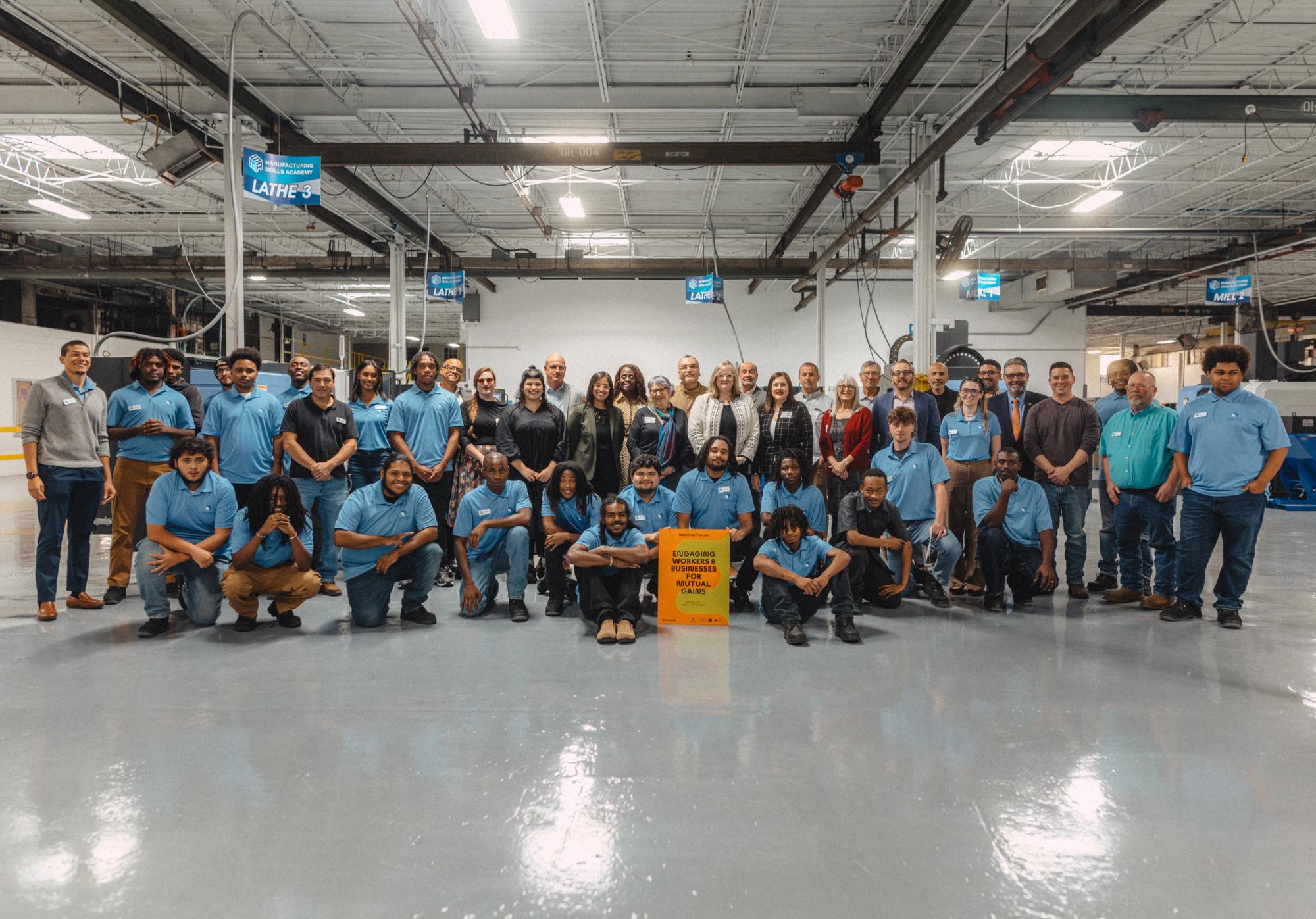
In October 2025, manufacturing leaders, business owners, workforce development experts, and workers gathered in Oklahoma City for Mechanism’s two-day convening, “National Forum on Engaging Employers & Workers.”
Hosted at the new Manufacturing Skills Academy, the event brought together our Engaging Businesses in Worker Voice project partners from Texas and Oklahoma to talk about best practices for incorporating employee voices in manufacturing—a practice that could help businesses retain employees in the face of nationwide manufacturing hiring struggles.
The event – hosted in partnership with Capital IDEA Houston and Harrison Consulting Group – inspired candid conversations about retaining employees and keeping them satisfied. Below are some of the main themes on attendees’ minds.
Small Changes to Workplace Culture Drive Big Retention Gains
Seemingly minor workplace adjustments can go a long way on worker retention and satisfaction. Workforce panelists talked about manufacturers adjusting shift times so both parents can work at the same company, and companies installing whiteboards at machines so workers could improve shift-to-shift communication, ensuring one employee picks up right where the other left off.
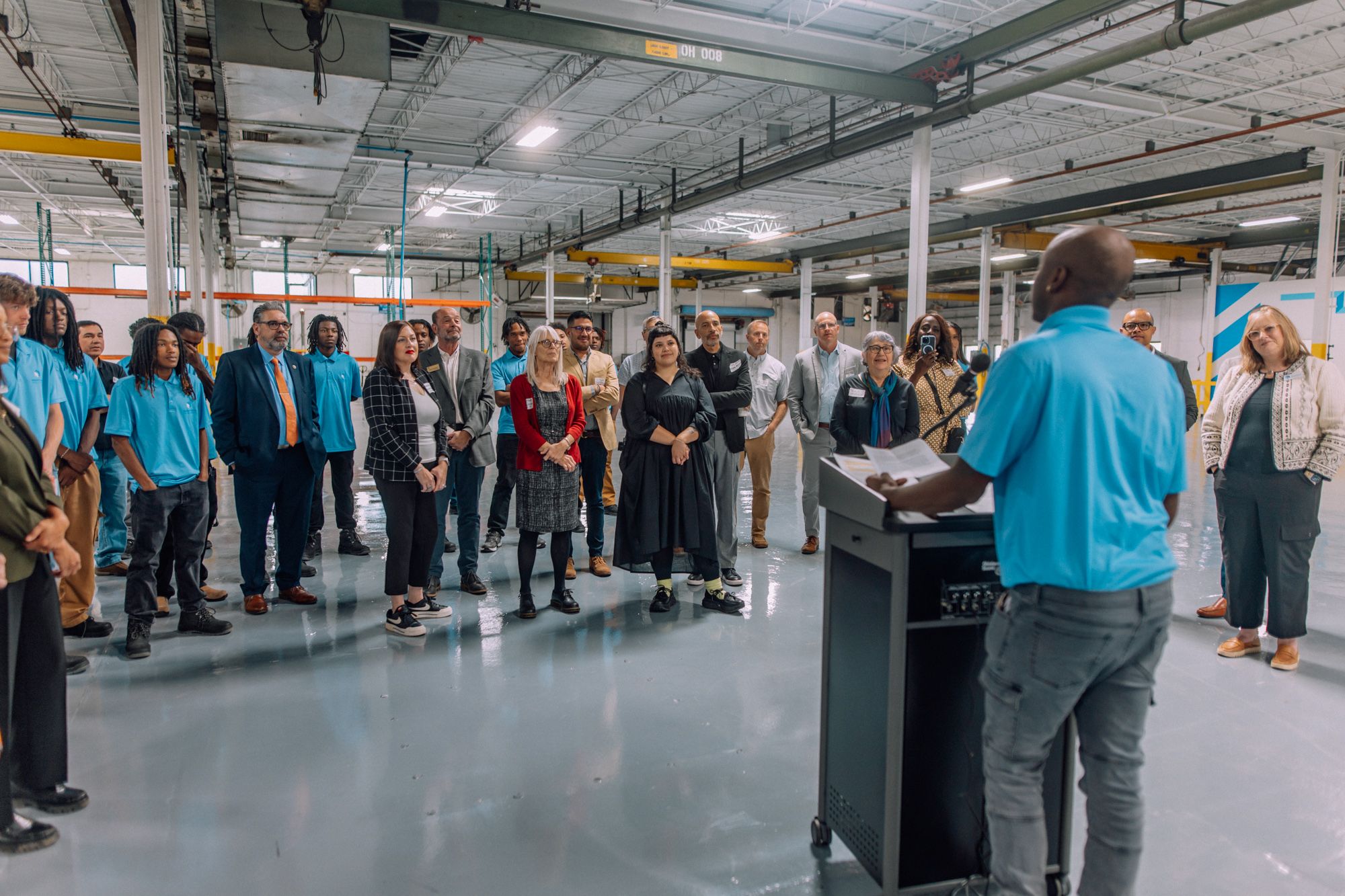
Photo by Dylan Johnson
Employers from the OKC region also talked about how providing flexible time off for life issues opens the door for talented workers who, without that flexibility, might not be able to commit to a full-time job.
Envisioning a Future Where Workers’ Off-Site Needs are Resolved
Todd Greene, Vice President of Work, Education, and Labor Division at the Urban Institute, noted it’s good to be forthright to find out what an employee’s ongoing work-related challenges may be. "It helps to ask people what their real barriers are: Skills? Low training wages? Conflicts that occurred on the shop floor?” he said, describing it as a “cultural change.”
Beyond the workplace, people recognized that off-site needs can also influence the conditions that allow someone to show up to work each day.
Trust, Communication, Rinse, Repeat
Both worker and employer panels said communication and trust are essential elements. Company culture cannot be overstated, and it cannot be faked, observed one worker on the worker’s panel. They highlighted how workplace tensions among leadership and staff, broken promises from management to employees, and unstable work environments drive good employees away.
“Trust is built within the organization. Trust is also broken within the organization."
—Dave Rowland, President & CEO of the Oklahoma Manufacturing Alliance.
Employers recognized that workers who grow with a company become more valuable to that company, meaning trust-building should become a strategic goal rather than just something discussed at a high, general level.
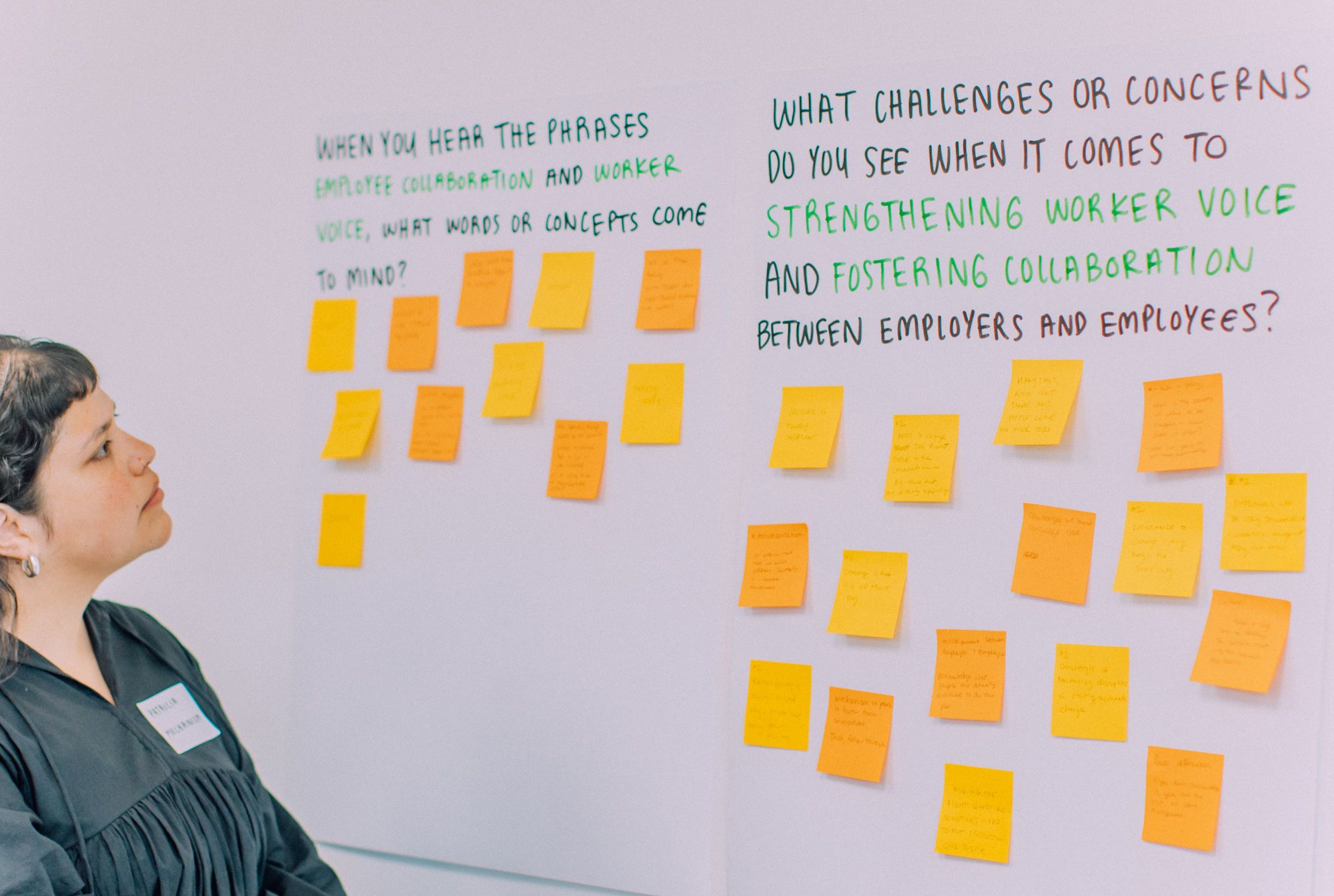
Photo by Dylan Johnson
Attendees were asked to dream a little. They were tasked with imagining headlines about what the future of manufacturing might look like in Oklahoma City if voices of workers were at the center of business strategy.
They shared visions of mandated free childcare with $20/hour starting wages for childcare workers, and regional transit systems spanning multiple counties to help workers access production ecosystem jobs that may be out of reach with current transit capacity.
One particularly inspirational headline: "The End of Generational Poverty: Community is Transformed Through Co-creation of Family Supporting Jobs Between Employees and Workers."
Fostering Engagement Through Culture
One key insight from the event came from an attendee’s observation that engagement is not an event; it is fostered through culture.
As a brief glimpse of what that culture looks like, Manufacturing Skills Academy trainees joined the event as tour guides, allowing participants to hear why they chose manufacturing and what the opportunity means for them.
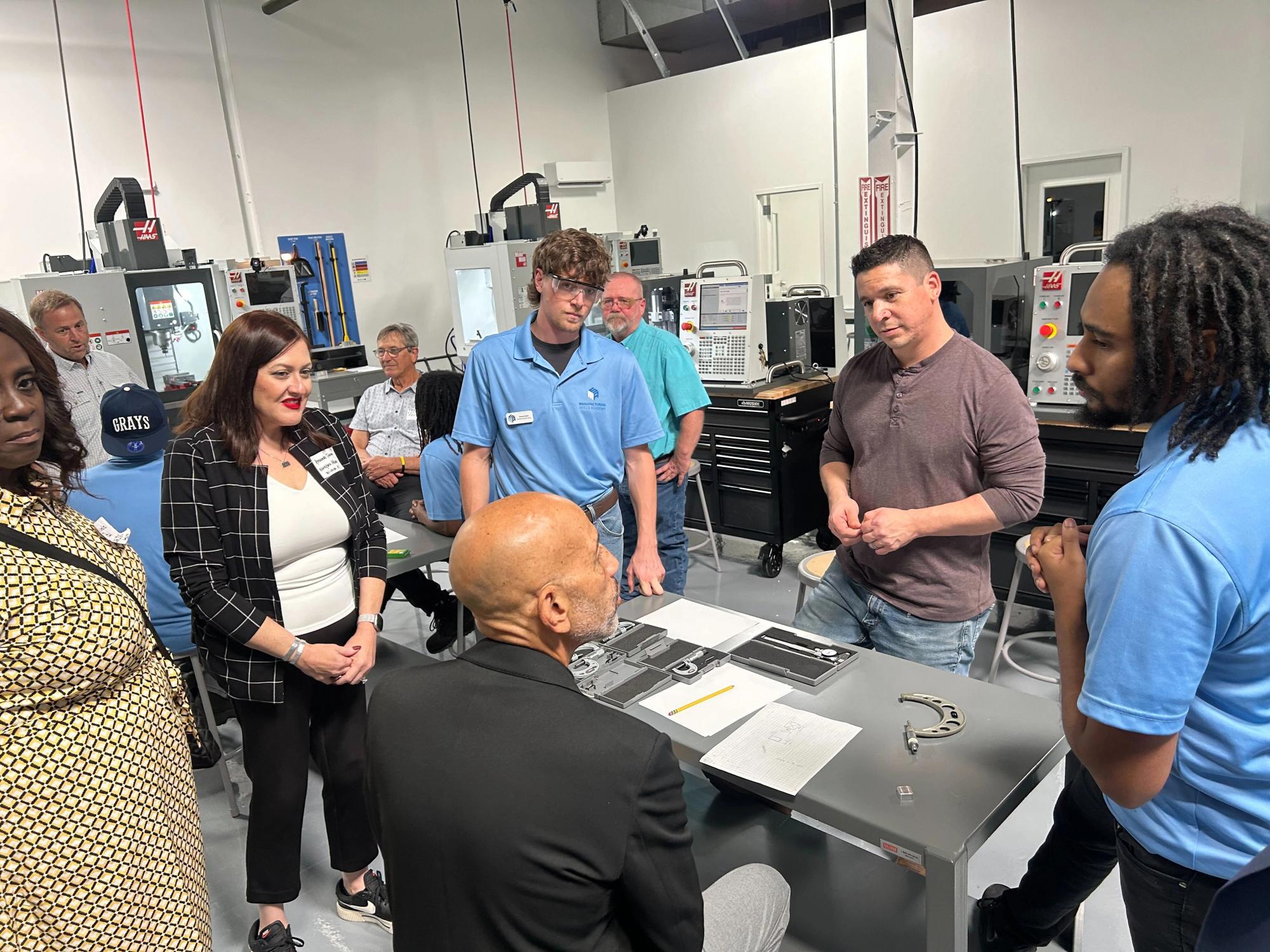
Photo by Patricia Bordallo Dibildox
Many attendees cited this as the event's highlight, with several saying they wanted to come to the trainees’ March graduation celebration.
Attendees made concrete commitments to one another as the event winded down. Mechanism heard promises to develop new tools beyond surveys for employee engagement, share resources across organizations, and strategize how to present manufacturing jobs' benefits to youth audiences.
The forum reinforced that incorporating worker voice into business operations isn't just about making workers happy—it's a strategy for business sustainability.
With four million manufacturing jobs expected to become available by 2033, companies that engage workers and incorporate their feedback in a systemic way will gain competitive advantage in talent retention and recruitment. As one attendee put it, the work requires "helping potential workers see the value of parts in a larger system" while at the same time educating employers on what's possible, starting small and celebrating wins to inspire that culture change multiple attendees talked about.
About Worker Voice
Worker Voice is a pilot project by Mechanism and two workforce intermediary partners in Texas (Capital IDEA Houston) and Oklahoma City (Harrison Consulting Group). Our goal is to create a tool and process that will support collaboration between manufacturers and workers to enhance workplaces, job quality, and business outcomes.
Visit our Worker Voice program page for more information.
Interested in Getting Worker Voice Updates?
Contact Mechanism Program Associate Katie O’Connor to learn more.