Community Makerspace Development Strategy
A community-centered roadmap for growing local creativity and entrepreneurship through makerspaces
I. Executive Summary
This development strategy outlines a phased, community-centered roadmap for growing local creativity and entrepreneurship through makerspaces. Grounded in national best practices and insights from makerspaces in the United States, this strategy charts a path from building foundational infrastructure to long-term community impact. The findings are drawn from interviews with ten makerspace experts representing a range of models, from volunteer-run collectives like Hive13 to staffed organizations like Generator and Decatur Makers.
Vision & Purpose
This strategy was originally developed by Mechanism for Westside Makerspace, a community hub for creative production, learning, and small-scale manufacturing, offering access to tools, training, and networks that help residents and local makers in Dayton, Ohio turn ideas into income and products into businesses. However, the principles and strategy are applicable to anyone interested in developing community-centered makerspaces where they live.
Insights from National Peers
Mechanism’s interviews with makerspace leaders revealed several key success factors:
- Programming should evolve with maker readiness. Begin with introductory equipment and training that create quick wins and confidence.
- Facilities thrive when embedded in mixed-use, accessible neighborhoods, rather than isolated industrial zones.
- Stability depends on aligning mission and market. Avoid mission drift by connecting revenue-generating activities with community or workforce outcomes.
- Volunteer management and community ownership are critical for long-term engagement.
- Safety and consistency in tool maintenance are as critical to organizational stability as innovation. Clear roles and reliable maintenance systems build trust and prevent burnout among members and staff.
- A welcoming, community-centered culture strengthens participation and retention. Consistent, open engagement helps turn curiosity into long-term involvement.
The framework below summarizes how a phased approach translates vision into action, guiding a makerspace from early activation to long-term sustainability.
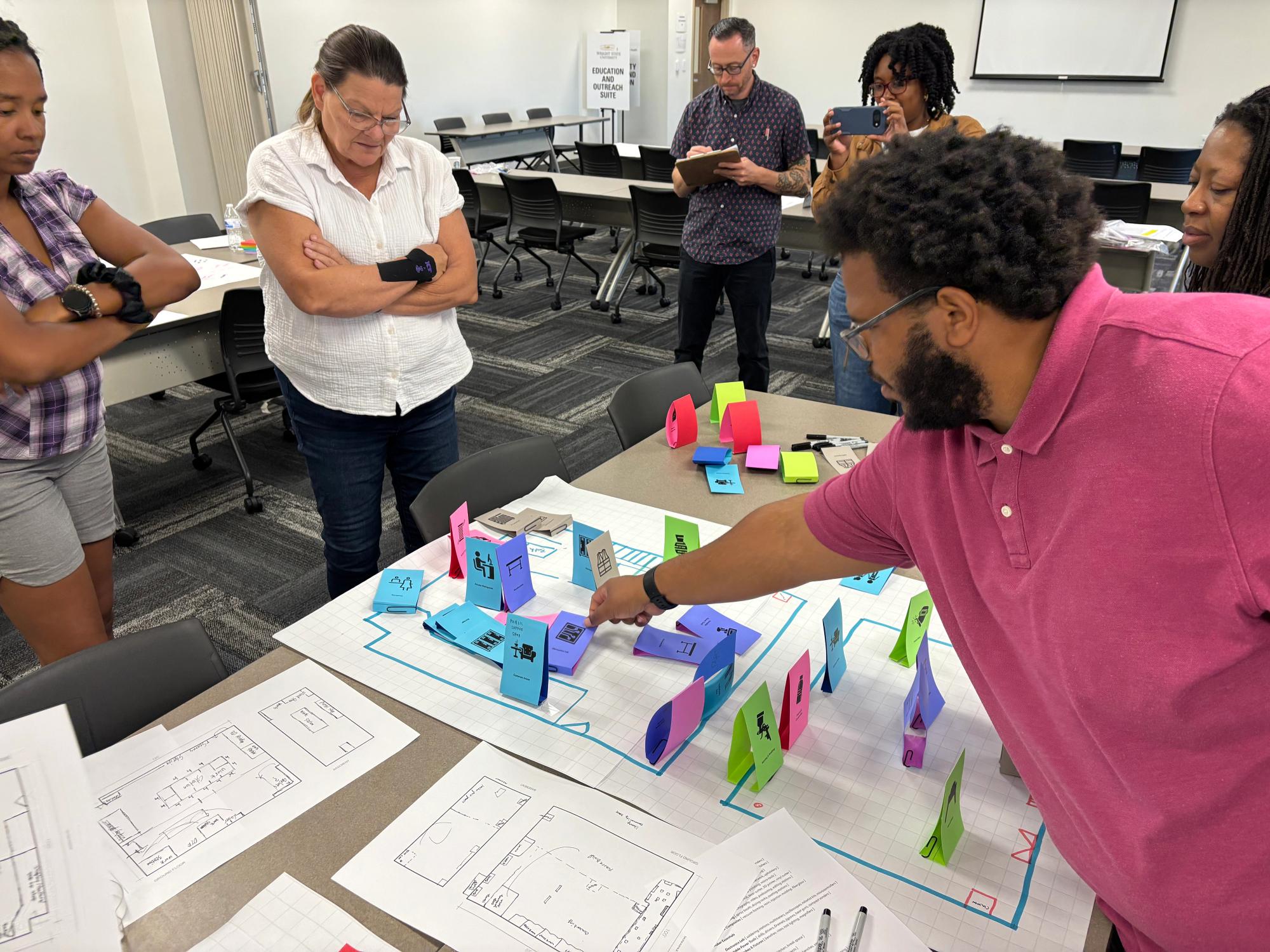
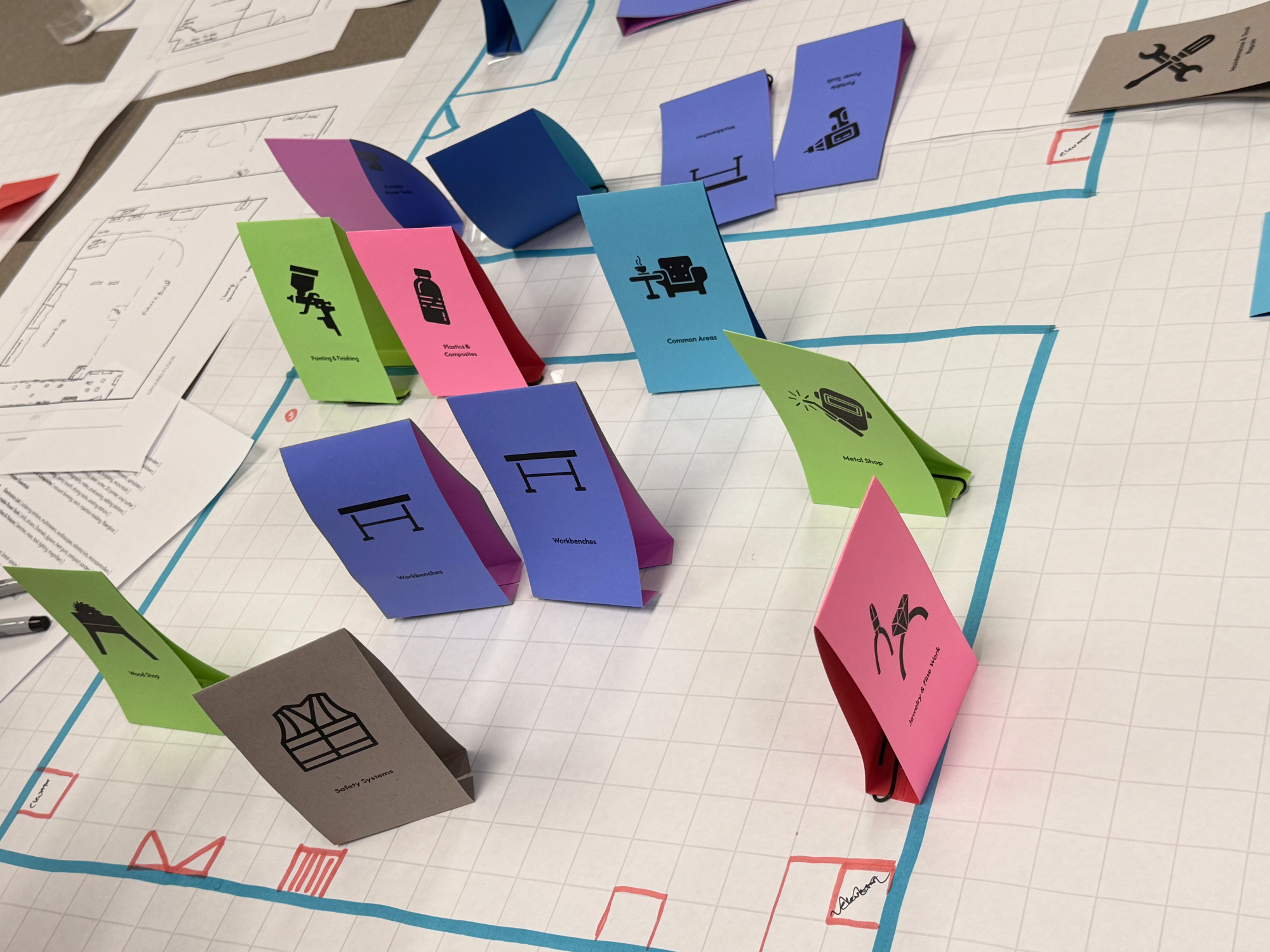
Mechanism meets with Westside Makerspace leaders to brainstorm the best ways to use their new space.
How This Development Strategy Supports Scaling
This development strategy unfolds in three stages of growth, each building the foundation for the next. Together, they guide makerspaces from early activation to long-term sustainability, ensuring that community engagement, operational strength, and leadership development grow in tandem.
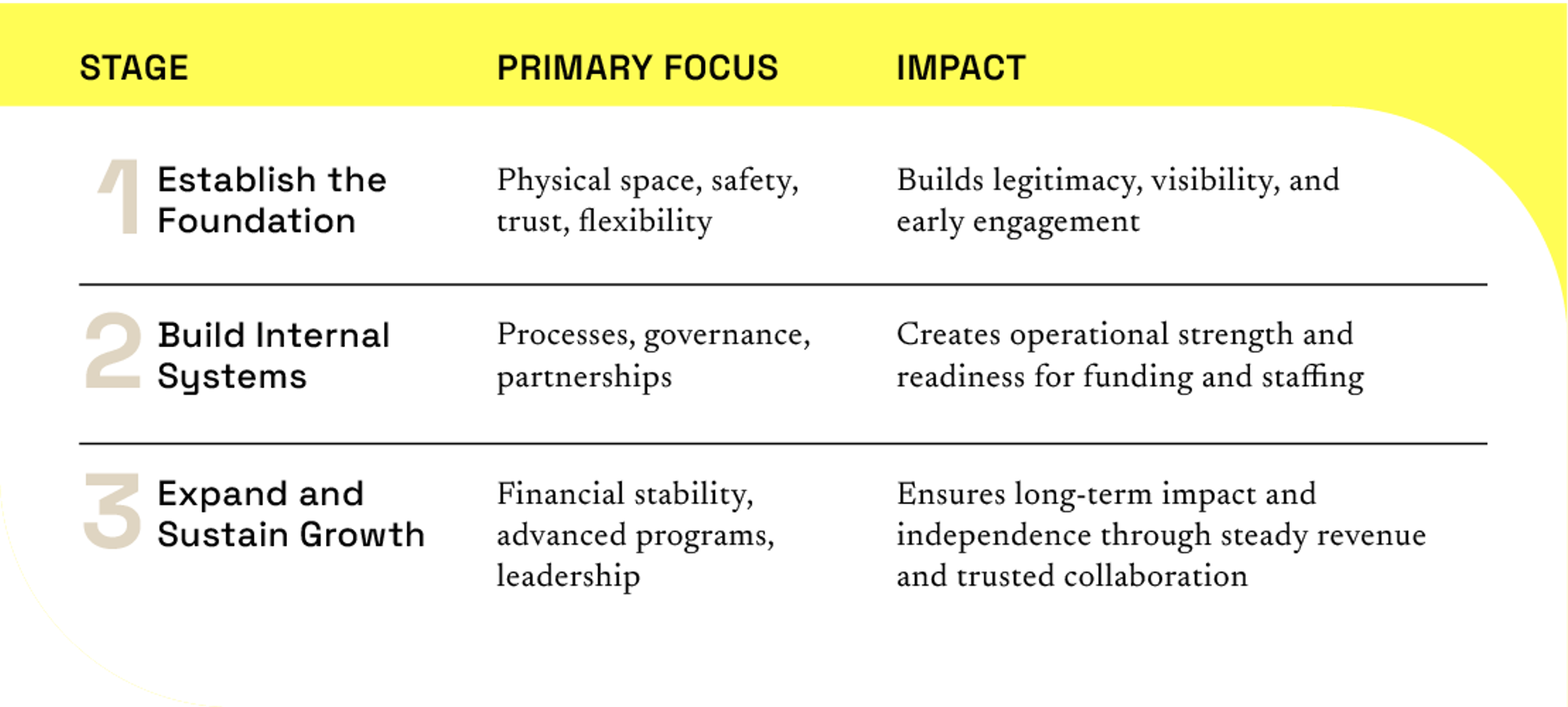
Figure 1: Development stages of growth. These stages were adapted from patterns described by peer organizations. They correspond to the detailed roadmap in the Development Strategy section.
II. Framing & Context
To capture a range of operational and cultural models, the following peer organizations were interviewed for their diversity in scale, region, and structure. Across these interviews, ten experts participated (eight in pairs and two individually) providing a balanced range of operational and philosophical perspectives.
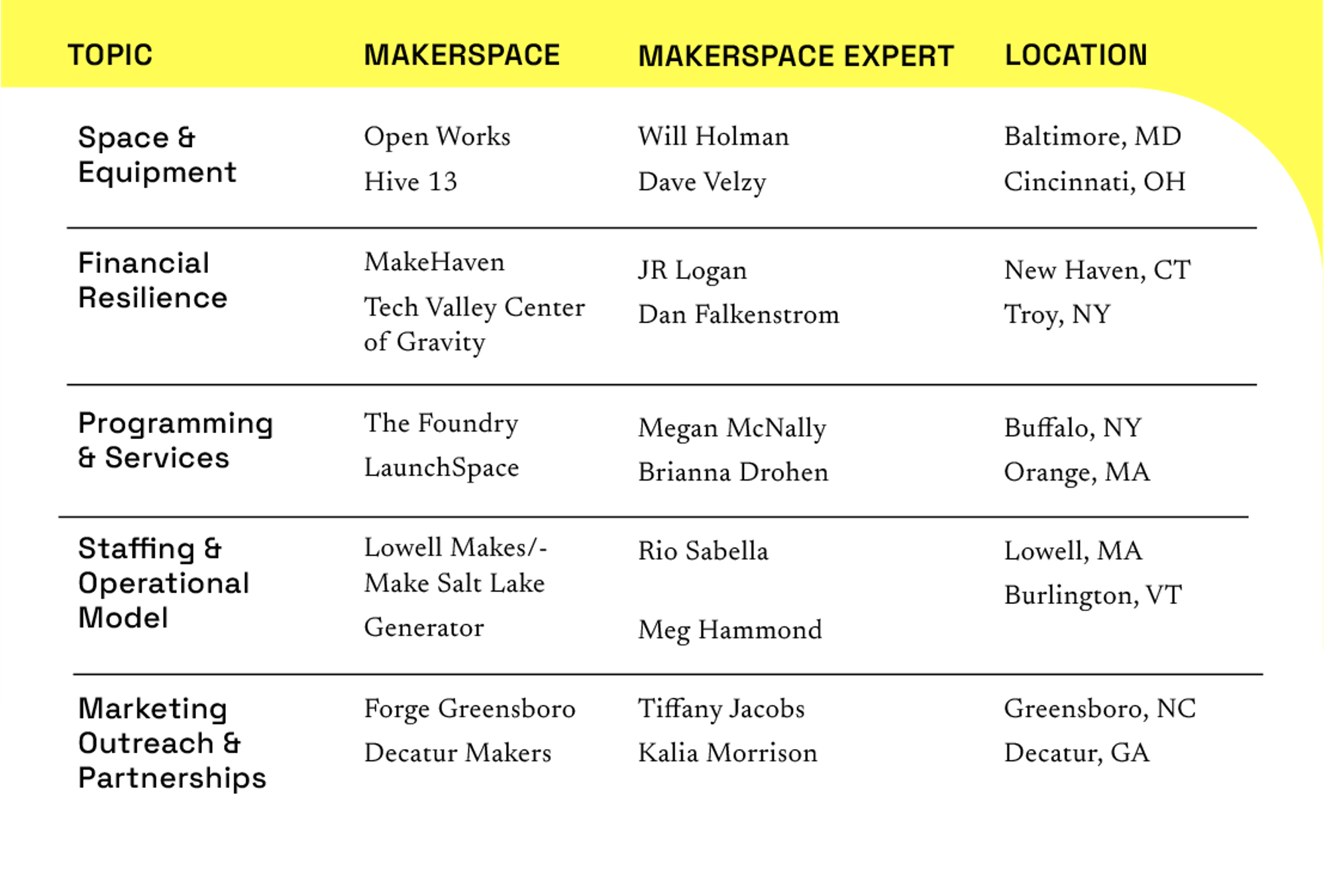
Figure 2: Makerspace expert interview details.
Building on the gathered insights, the next section (Development Strategy) proposes a practical roadmap for growth. It defines the stages, principles, and systems that will guide a makerspace’s evolution across five strategic pillars, ensuring that equity and community remain at the core of every step.
III. Development Framework
Purpose & Framing
This plan outlines a set of strategic options and guiding pathways that makerspace teams may consider as they grow from concept to a sustainable community resource. The intent is to offer practical directions and decision-making tools that can evolve with a team’s capacity, partnerships, and goals.
Foundational work already underway has been integrated with forward-looking opportunities. The result is a roadmap that connects early buildout and activation activities with long-term resilience and growth.
The following guiding pillars define what makerspaces build and sustain over time, from their physical space and programming, to their community relationships and financial foundation.
Strategic Pillars
Space & Equipment
Develop a safe, flexible, and accessible physical environment that encourages collaboration and creativity. The space should be designed to evolve over time, supporting multiple uses and expanding as community needs grow.
Financial Resilience
Build a strong financial base through diversified revenue streams, partnerships, and responsible budgeting. Financial resilience ensures that the makerspace remains stable and adaptable as conditions change.
Programming & Services
Offer high-impact workshops, open work sessions, and partner-led programs that meet community needs. Over time, this programming can expand to include advanced training, entrepreneurship pathways, targeted workforce development training and creative residencies.
Staffing & Operations
Establish clear systems for governance, staffing, and volunteer coordination. Strong operations help maintain consistency, accountability, and long-term efficiency as the organization grows.
Marketing, Outreach & Partnerships
Build awareness and engagement through consistent storytelling, community events, and partnerships. Effective outreach ensures that the makerspace stays connected to its members and visible within the broader creative and economic ecosystem.
These five pillars are interconnected areas of growth that mature together. In the next section, Principles and Pathways for Growth, we outline how makerspaces can strengthen each pillar through three stages of development, moving from early foundation to sustainable growth, guided by core principles drawn from 10+ makerspaces.
Principles & Pathways for Growth
This section outlines how the five strategic pillars can progress through three developmental stages, supported by a consistent set of principles that define how growth happens. Ideally, development will evolve as readiness, relationships, and resources grow.
The strategic pillars describe what a makerspace will build. The principles describe how it will build. The development stages show when and where these efforts take shape. Together, they create a roadmap that connects early activation to long-term sustainability.
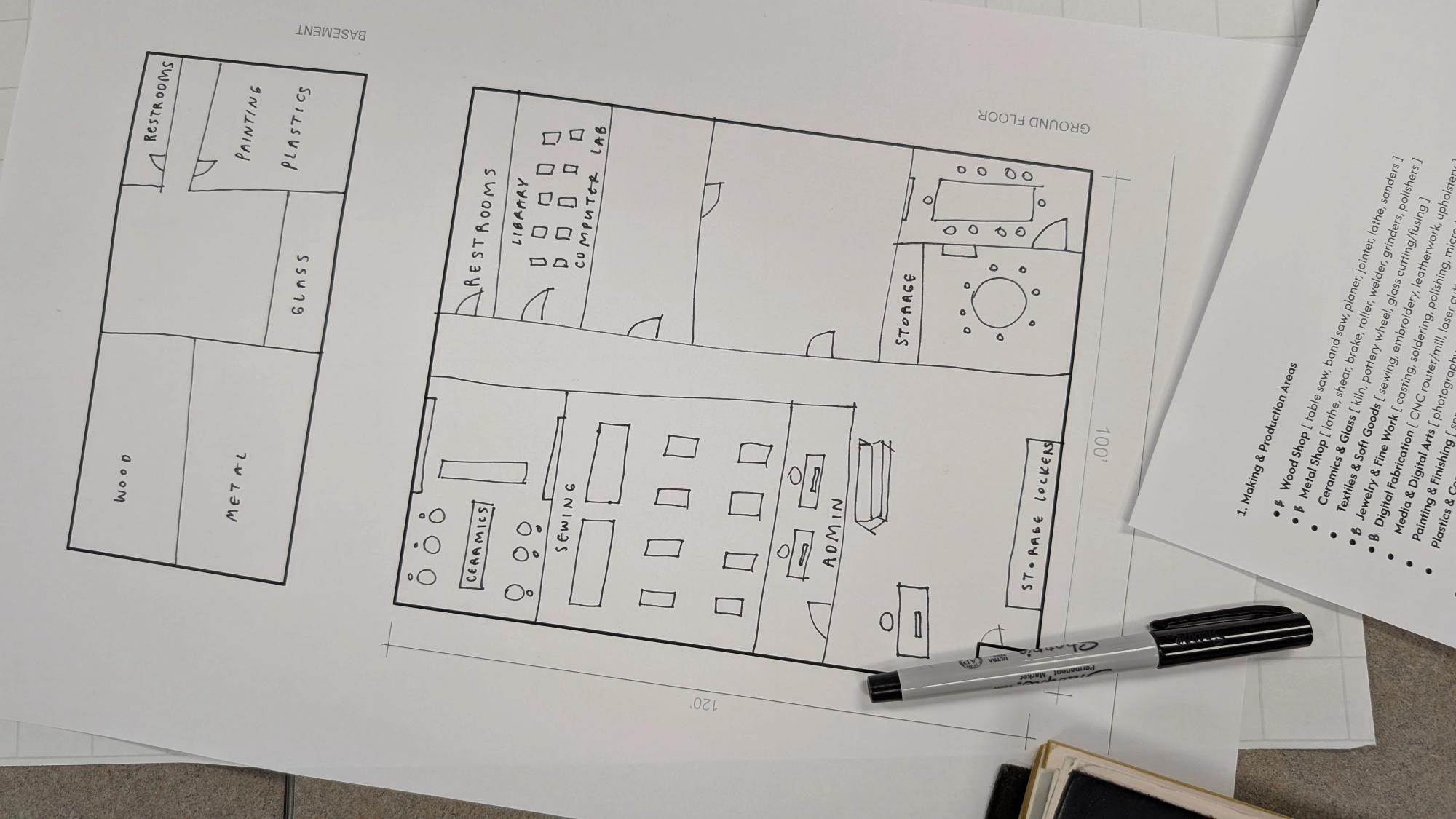
The five principles below reflect the mindset and behaviors that will support a makerspace’s growth across all stages. They’ll be discussed in greater detail in Section IV., Growth Principles. While they remain constant, their application changes as the organization matures.
Guiding Principles for Growth
Build Community Ownership Early.
Focus on the people inside the makerspace. Engage residents, volunteers, and members from the start so they shape how the space looks, feels, and functions. Encourage shared responsibility, decision-making, and pride in the space’s success. Community ownership turns participants into co-creators, ensuring the makerspace grows from the inside out.
Invest in Partnerships & Collaboration.
Focus on the ecosystem outside the makerspace. Build relationships with schools, nonprofits, funders, and local businesses to exchange resources, knowledge, and visibility. These partnerships extend a makerspace’s impact beyond its walls and position it as part of a regional network for creativity and innovation.
Start Small and Iterate.
Begin with small, visible actions that build momentum and allow space for learning. Each new step should strengthen systems, improve efficiency, and deepen understanding.
Design for Flexibility & Accessibility.
Create spaces, programs, and systems that can evolve with community needs. Flexible, inclusive design ensures that the makerspace remains accessible and relevant over time.
Balance Structure & Creativity.
Develop processes and systems that create stability without limiting experimentation. Sustainable growth requires structure that supports innovation rather than restricts it.
All five principles remain important throughout a makerspace’s growth, but each stage emphasizes the ones most critical to that phase of development. Early stages prioritize participation, experimentation, and accessibility, while later stages focus on structure, partnerships, and sustainability. A detailed visual summary of how the principles evolve across stages is included in Appendix A for reference.
Stages of Development
Building on these guiding principles, a makerspace’s growth can be understood through three interconnected stages: Establish the Foundation, Build Internal Systems, and Expand and Sustain Growth. Each represents a natural progression in readiness and capacity, from early activation and trust-building to operational strength and resilient scaling. These stages are fluid and may overlap as a makerspace’s resources, partnerships, and community engagement evolve. The following visual summarizes progression across three interconnected stages of growth. Each stage builds on the last, deepening the organization’s capacity and community ownership.
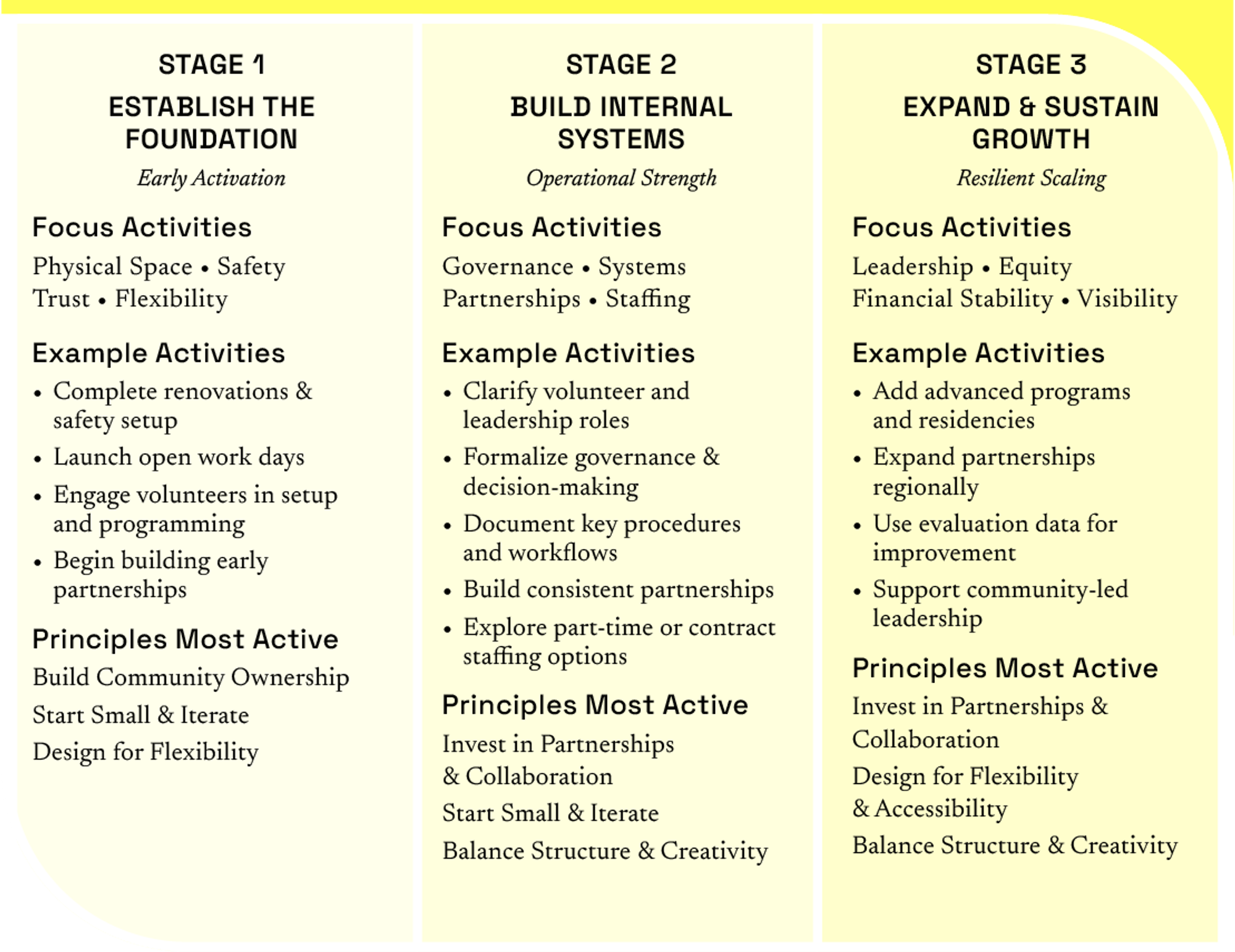
Figure 3: Makerspace Development Pathway. This figure shows how focus areas, activities, and key principles shift across each stage of growth. It is adapted from common best practices and growth stages shared by all peer makerspaces interviewed for this report.
Together, these three stages form a roadmap for a makerspace’s evolution, moving from early activation to organizational maturity and resilient scaling. Each stage builds on the one before it, deepening community engagement, operational capacity, and long-term sustainability. The following pages describe each stage in greater detail, highlighting how a makerspace can apply its principles for growth in practical, measurable ways while drawing on lessons from peer makerspaces.
Stage 1: Establish the Foundation
In this stage, a makerspace focuses on creating both the physical and social foundation for the makerspace. The goals include completing renovations, ensuring safety compliance, acquiring tools, and activating the community through visible, hands-on experiences.
Principles in Action
Build Community Ownership Early through open work days and volunteer-driven projects.
Start Small and Iterate by testing small-scale programming and learning from feedback.
Design for Flexibility and Accessibility to make participation simple and inclusive.
Peer Examples
Decatur Makers described how consistent, open community nights and a welcoming culture create a sense of belonging from day one. This approach turns curiosity into participation and participation into ownership.
Lowell Makes emphasized that reliability and safety are essential to trust in the early stages of activation. A consistent maintenance system, even when volunteer-driven, signals professionalism and care.
Forge Greensboro noted that community activation can also start through purposeful programming. For example, tools and equipment can be used early on to meet local needs and demonstrate the broader value of the space to the community.
Key Takeaways
This stage is about establishing legitimacy and trust while preparing the space for use. By centering ownership and flexibility, makerspaces can build a strong community foundation before introducing formal systems.
Stage 2: Build Internal Systems
As a makerspace gains momentum, the focus shifts to strengthening internal systems that enable consistent growth and collaboration.
Principles in Action
Balance Structure and Creativity by introducing clear processes that support innovation rather than limit it.
Invest in Partnerships and Collaboration through structured relationships that add capacity and credibility.
Start Small and Iterate by refining systems and governance as the organization learns.
Peer Examples
Generator and Lowell Makes emphasized that this stage is where clear staffing and safety systems prevent burnout and accidents.
LaunchSpace and The Foundry both emphasized the importance of formal governance, documentation, and partnership systems after initial activation.
Hive13 noted that defining roles and documenting systems became essential once volunteer energy plateaued.
Westside identified similar priorities in its coaching sessions, including role clarity, part-time staffing, and partnership development.
Key Takeaways
This stage bridges passion and professionalism. It turns early enthusiasm into organized structure, builds confidence among partners, and prepares the organization for sustainable operations.
Stage 3: Expand and Sustain Growth
At this stage, a makerspace grows from a local makerspace into a regional hub for creativity, training, and innovation. The focus turns toward advanced programs, earned income, and deeper collaboration.
Principles in Action
Invest in Partnerships and Collaboration to scale impact through shared resources and cross-sector initiatives.
Balance Structure and Creativity to sustain innovation through stable systems.
Design for Flexibility and Accessibility to ensure inclusion remains central as programming expands.
Peer Examples
MakeHaven and Tech Valley Center of Gravity noted that growth at this stage depends on diversified income and careful cash-flow management during grant reimbursements.
The Foundry and Open Works achieved sustainability through diversified revenue streams such as residencies, paid workshops, and certifications.
Peer organizations described evolving from early, volunteer-driven operations to becoming recognized regional connectors by strengthening partnerships and maintaining visible leadership.
Westside’s long-term vision of anchoring a creative economy hub in West Dayton aligns directly with this stage.
Key Takeaways
Sustaining growth means deepening impact, not just expanding size. This phase positions the makerspace as a trusted, resilient institution that creates equitable opportunities and supports the broader creative ecosystem.
Together, these three stages chart a makerspace’s progression from early activation to resilient scaling. Each phase deepens the organization’s ability to balance community participation with operational discipline. This development strategy provides a structured yet flexible roadmap—one that evolves as the makerspace’s capacity, partnerships, and creative ecosystem grow. The next section, Ecosystem Drivers: Systems Powering Growth, explores the underlying systems that sustain this progress over time.
IV. Growth Principles
The following Growth Principles serve as enduring guideposts that shape decision-making across five strategic pillars. They act as connective tissue that translates strategy into daily practice, ensuring each pillar grows in ways that reflect shared values. By applying these principles within each pillar (Space & Equipment, Financial Resilience, Programming & Services, Staffing & Operations, and Marketing & Outreach), a makerspace can strengthen both its organizational foundation and the broader creative ecosystem it supports. This approach keeps growth grounded in inclusion, flexibility, and shared ownership.
While each Growth Principle supports strategic pillars, they can also be understood through two connected ways of thinking that describe how the organization grows. The Relational Principles focus on people, culture, and inclusion, ensuring that growth stays rooted in community and shared values. The Operational Principles focus on systems, learning, and collaboration, ensuring that growth is organized, adaptable, and sustainable. Together, these ways of thinking show how a makerspace balances connection and structure as it evolves.
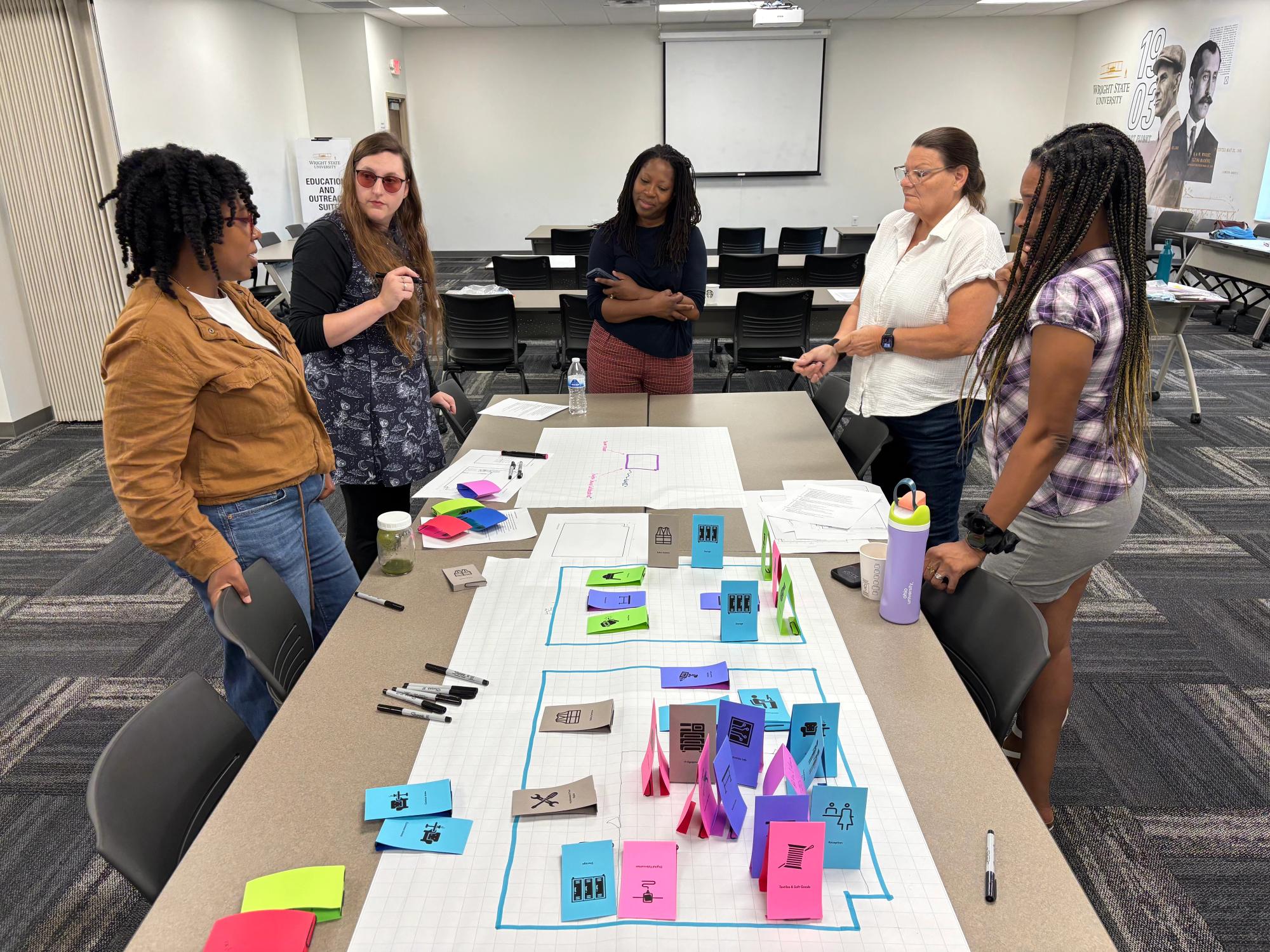
Mechanism meets with Westside Makerspace leaders to brainstorm the best ways to use their new space.
Relational Principles
The Relational Principles focus on the people-side of a makerspace’s growth. They emphasize participation, inclusion, and shared purpose as the foundation of a thriving makerspace. These principles shape how a makerspace builds trust, cultivates belonging, and invites collaboration across its community. By centering relationships, the organization ensures that growth remains rooted in the lived experiences, creativity, and leadership of local residents.
Build Community Ownership Early. Community involvement is at the heart of every successful makerspace. Examples from peer organizations show that open, low-cost opportunities to get involved are essential for trust and momentum. When people see themselves as co-creators instead of users, participation becomes a shared investment in the space’s success. Several leaders noted that reliability and clear communication build trust as much as access does: “Volunteer energy drives the entire space, but tools that work and consistent expectations make people stay.” Others emphasized that ownership starts with belonging. Creating a welcoming environment helps everyone feel invited to contribute ideas, skills, and time.
Evidence from Peer Interviews
MakeHaven emphasized that early, member-led projects are key to building ownership and identity. He noted that when members have a hand in creating something tangible within the space, they begin to see it as theirs. This sense of shared authorship helps establish lasting investment in the organization’s success.
The Foundry described how participation evolves from consuming to creating, explaining that once people experience making something themselves, they begin to think differently about what the space and the community can accomplish together.
Design for Flexibility and Accessibility. Spaces and systems should adapt to the community, not the other way around. The Foundry, Make Salt Lake, and Decatur Makers emphasized that lowering barriers (through scholarships, adaptable programs, and inclusive leadership) keeps participation broad and relevant. Flexibility may mean designing multipurpose spaces and entry points that invite a wide range of makers, regardless of background or experience.
Evidence from Peer Interviews
Decatur Makers described a philosophy of “aggressive friendliness” that makes the space open to people of all ages and backgrounds, especially youth and families. The Foundry offers flexible memberships and scholarships to lower financial barriers, while Make Salt Lake includes diverse voices in leadership and programming.
Open Works shared how offering both textile and digital fabrication spaces encouraged participation by women, seniors, and new makers. These examples show that equitable access is essential for community relevance and long-term growth.
Operational Principles
The Operational Principles focus on the system side of a makerspace’s growth. They emphasize structure, learning, and collaboration as the mechanisms that sustain creativity and progress over time. These principles shape how a makerspace organizes its work, strengthens partnerships, and builds capacity to deliver on its mission. By establishing clear systems that reflect its values, the organization ensures that growth is both effective and enduring.
Invest in Partnerships & Collaboration. Strong partnerships will expand a makerspace’s capacity, credibility, and reach. Makerspaces that thrive show that collaboration with schools, nonprofits, and local businesses multiplies impact and creates long-term stability. Investing in partnerships means creating systems and routines that make collaboration part of everyday operations. These partnerships should be evolving relationships built on mutual trust, shared goals, and transparent communication. Weaving collaboration into planning, programming, and funding, will help strengthen the ability to operate as part of a connected ecosystem.
Evidence from Peer Interviews
LaunchSpace described a partnership with a regional hospital that created a Creative Sector Pathway program connecting young adults with histories of addiction to jobs in the creative industry. The Foundry collaborates with schools and colleges to share space and resources.
Open Works said that cooperation across Baltimore’s creative community is essential for sustainability. These stories show how strong partnerships can turn isolated efforts into a connected network, which is a useful model for growth.
The Foundry collaborates with schools and colleges to share space and resources. In several cases, these relationships were structured as paid, fee-for-service contracts. For example, schools purchasing makerspace-led programs or community organizations contracting the makerspace to fabricate items like public bike racks.
Start Small and Iterate. Thriving makerspaces grow through experimentation and reflection. They test ideas, learn from missteps, and adapt in response to what they observe. Iteration is central to their culture, whether refining programs, redesigning spaces, or rethinking operations. This can mean building a practice of experimentation, tracking results, and learning from experience to stay responsive and relevant over time.
Evidence from Peer Interviews
The Foundry described how starting small and testing ideas with the community helped refine their programs over time. Each pilot became a way to learn what worked and what needed to evolve.
Forge Greensboro shared that early programs often required adjustment, noting that iteration and responsiveness were key to finding what truly resonated with the community.
Balance Structure & Creativity. As organizations grow, they need systems that sustain creativity rather than constrain it. Makerspaces such as Hive13 and Lowell Makes demonstrate that shared governance, transparent decision-making, and rotating leadership can support both order and innovation. Balanced structure can mean establishing clear roles and systems early while preserving room for creative exploration.
Evidence from Peer Interviews
Hive13 uses a member-led governance model that balances structure with flexibility. Decisions are made through consensus, and leadership rotates based on project ownership.
The Foundry emphasized that structure can serve creativity rather than constrain it. She described creating “a framework for people to be creative inside of,” ensuring collaboration remains coherent as the organization grows.
Together, these five principles describe the mindset and systems that guide a makerspace’s evolution. The Relational principles anchor the organization in community trust, equity, and creativity. The Operational principles ensure it can grow in a flexible, collaborative, and transparent manner. These principles are living practices that form the foundation for every stage of a makerspace’s development.
The figure below visualizes how these principles intersect with five strategic pillars, showing where Relational and Operational focus areas reinforce one another.
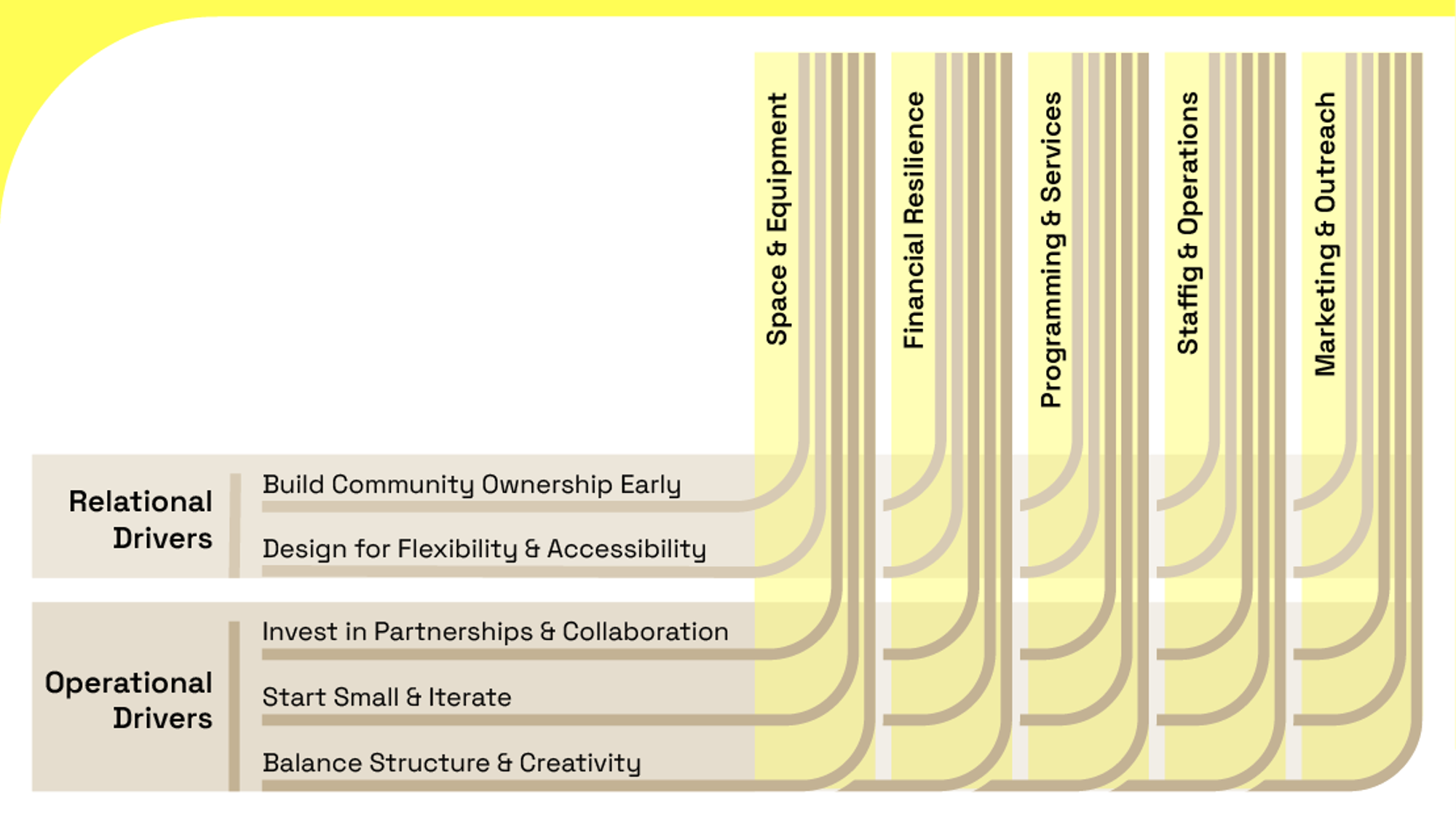
Figure 4. Makerspace Pillars
The five strategic pillars rest on two guiding foundations. Relational Principles emphasize participation, inclusion, and culture. Operational Principles emphasize governance, learning, and partnerships that keep the organization effective and resilient over time.
V. Conclusion
This development strategy translates vision into measurable change. By expanding equitable access to space, tools, and networks, the makerspace enables residents and entrepreneurs to turn ideas into income, strengthen local supply chains, and build a shared culture of creativity and innovation. Through intentional, phased growth and deep community participation across five strategic pillars, makerspaces can shape a resilient ecosystem that advances economic opportunity, social connection, and long-term neighborhood revitalization.
A detailed logic model outlining these expected outcomes is provided in Appendix B. The outcomes are consistent with what peer makerspaces reported, especially improved skill-building, confidence, and local entrepreneurship outcomes.
Appendix
A. How Principles Evolve
The table below shows how each principle applies differently as the makerspace evolves. Each principle evolves across stages, guiding how makerspaces apply their values as capacity grows. Highlighted principles in the table show where the organization should direct its primary attention at each stage. Other principles continue in the background, each one grounded in insights from the ten peer interviews.
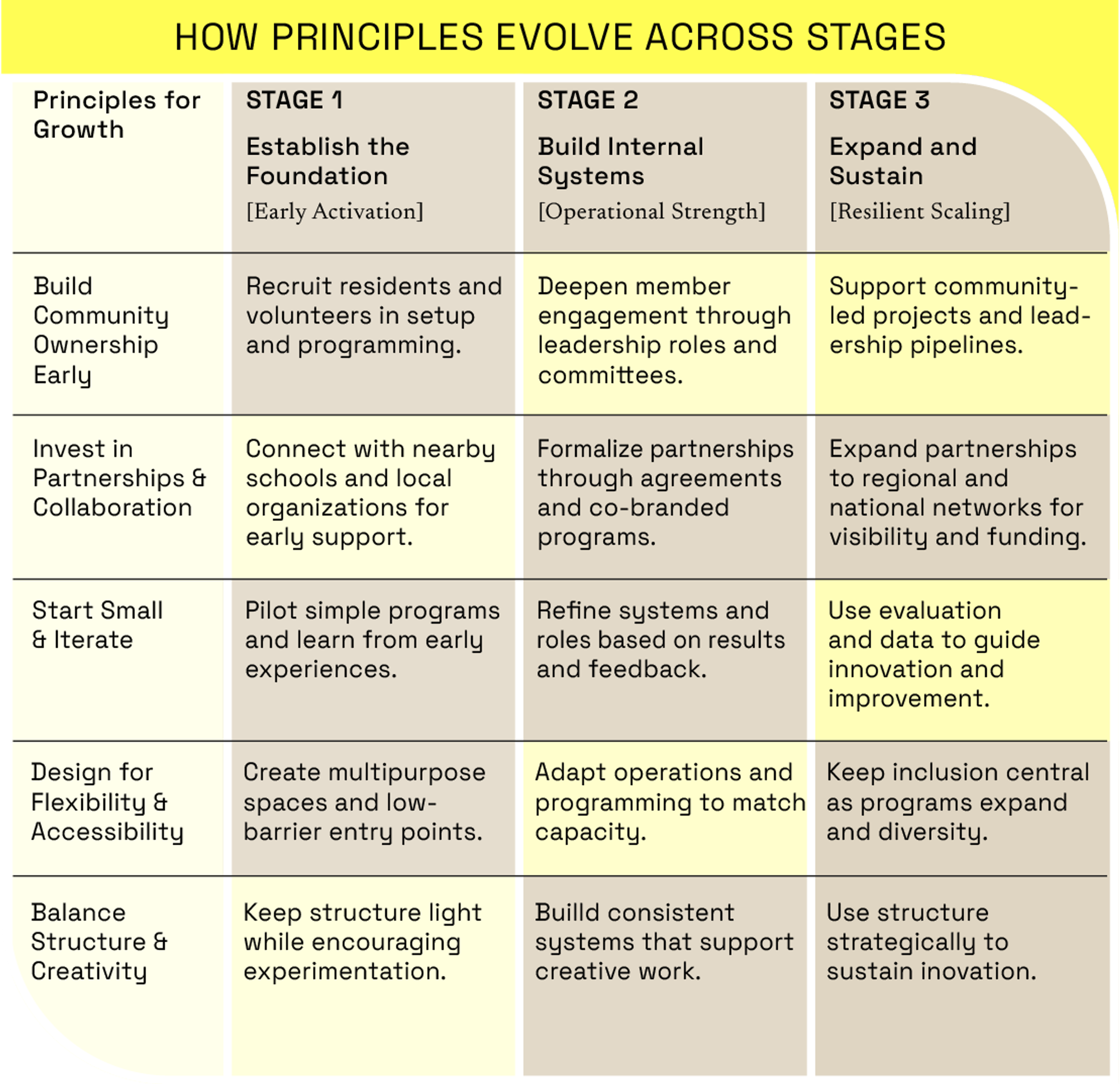
Figure 5: Shaded cells indicate which principles are most critical at each stage of development. Color shading aligns with the corresponding stage header for easy reference.
B. Peer Representation in the Development Pathway
Connecting the Framework to the Research. The makerspace development pathway (shown in the main report as Figure 3) was developed through an iterative analysis of ten peer interviews. Each stage in that framework reflects collective best practices observed across different makerspace models, ranging from volunteer-led to professionally staffed organizations.
The table below summarizes how insights from those interviews informed each stage of development. It demonstrates the breadth of representation across the three growth stages and reinforces that the pathway is grounded in shared experience rather than individual examples.
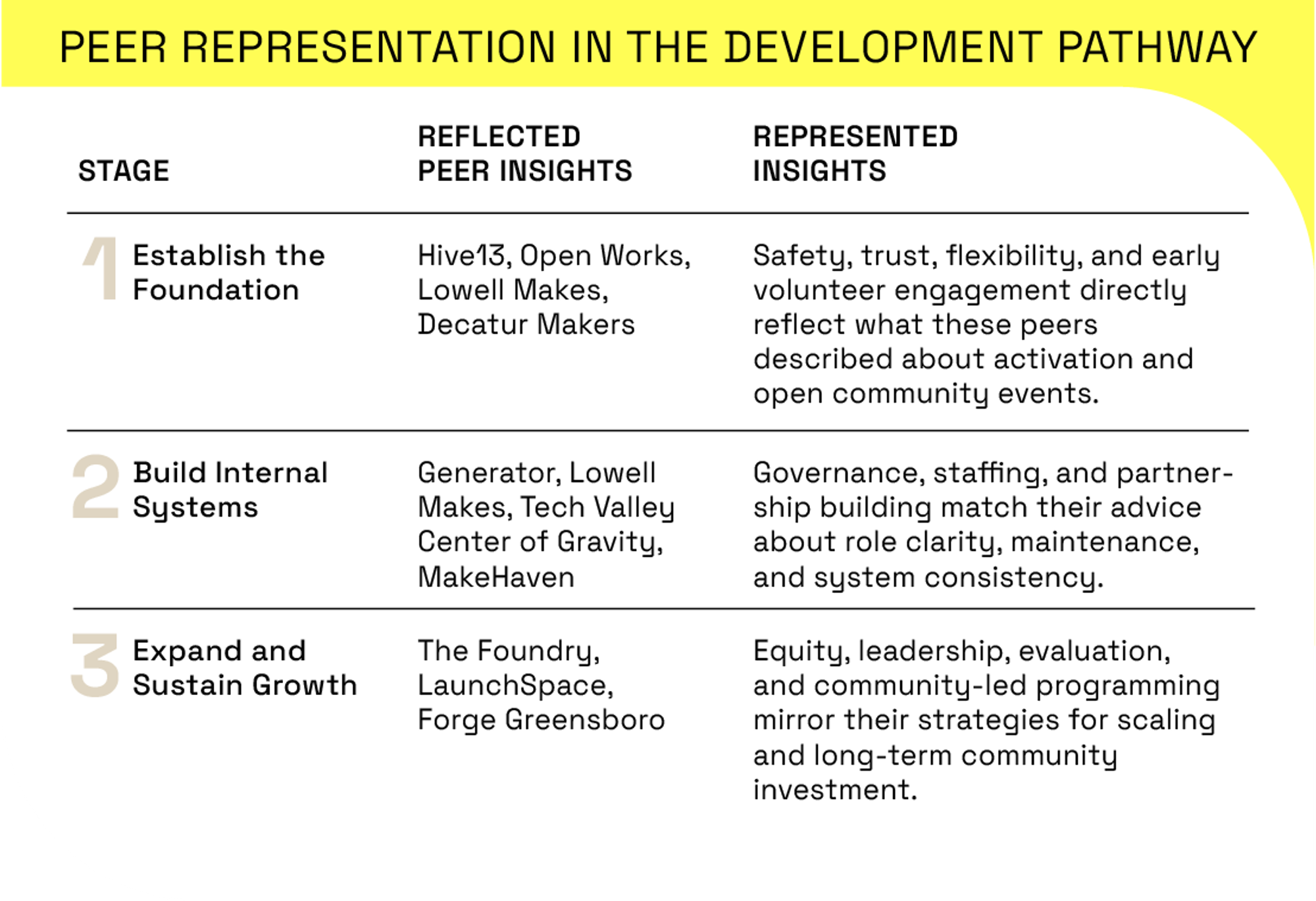
Figure 6: Peer input reflected in the stages of the Development Pathway.
The Development Pathway reflects the collective insights of all peer interviews. While individual examples in the main report highlight distinct operational models, the principles that emerged were consistently emphasized across conversations. Together, the pathway and the summary table above illustrate the progression of ideas that informed this development strategy. The strategy is grounded in the shared practices and collective experience of the wider makerspace field.